
Oh, you know those dishes that just feel like a giant, warm hug after a long, cold day? That’s exactly what I get when I pull this gorgeous pot out of the oven. Forget fussy weeknight meals for a second because we are diving deep into the heart of Greek comfort food today with my spectacular **Beef Giouvetsi**. This isn’t some quick-fix pasta bake, no sir! This recipe takes time, but trust me, the slow-cooked depth of flavor in that rich tomato sauce, soaking into fluffy orzo, is absolutely worth every second.
I wrestled with this recipe for ages, trying to get the ratio of liquid to pasta just right so the beef would melt and the orzo would plump perfectly without turning to mush. After a few trials—and maybe a couple of very tasty (but slightly soupy) mistakes—I nailed the technique. We are talking fall-apart tender beef, aromatic herbs, and that incredible, rustic texture only a true, long bake can achieve. If you love braises and want an easy cleanup, you absolutely need this Greek baked beef and orzo dish in your life. You’re going to love how simple the assembly is, especially once you’ve tried making a rich braise like my Italian Pot Roast!
Why This Beef Giouvetsi Recipe Works So Well
Honestly, this recipe is a weeknight hero disguised as a fancy holiday meal. It sings because it relies on time, not intense fussiness. This slow-cooked approach guarantees the best result. Before you even decide to make it, just look at the payoff:
- Incredible, deep tomato flavor thanks to that wine reduction step.
- Beef that melts right onto your fork—you barely need a knife!
- The orzo gets perfectly saturated with all those delicious juices.
- Plus, you get this rich, satisfying baked dish using just one pot. Talk about easy cleanup! If you are looking for other dishes that satisfy that cozy craving, you should definitely check out my list of comforting fall pasta recipes.

Tender Beef Every Time in Your Beef Giouvetsi
The secret weapon here is the beef chuck and the ridiculously long initial bake time. Chuck might seem tough when you buy it, but when you slowly simmer it in liquid for almost two hours, magic happens. The connective tissue breaks down completely! That slow soak also sets you up perfectly for the orzo later. When you add the pasta, you make sure the braising liquid is just right—not too soupy, not too dry—so the little grains absorb every bit of flavor while they cook through. That’s the key to foolproof **Beef Giouvetsi**!
One-Pot Greek Comfort: The Magic of Baking Beef Giouvetsi
If you’re anything like me, you dread dishes that look amazing but leave you scrubbing three different pans afterward. Not with this! This entire dish—from browning the beef to cooking the orzo—happens in one heavy, oven-safe pot, usually my Dutch oven. You just sear everything on the stovetop, pop the lid on, and let the oven do all the heavy lifting. It’s pure, hands-off cooking, which means more time enjoying that amazing Greek aroma filling your kitchen. Seriously, for perfect one-pot **Beef Giouvetsi**, you need a good vessel!
Gathering Ingredients for Authentic Beef Giouvetsi
Okay, before we dive into the magic, we need our players lined up! Getting the right bits and pieces together makes the cooking process so much smoother. Trust me, when you have everything ready to go—your onions chopped, your beef measured—you never stress about burning the garlic while you’re fishing out the broth!
Here’s what you’ll need to make this incredible **Beef Giouvetsi**. Make sure to give that beef a good, hard season before it even thinks about hitting the pan!
- About two pounds of beef chuck, cut into nice, uniform 1-inch cubes. Uniformity is key for even cooking!
- Two tablespoons of good quality olive oil—no skimping here, this starts our flavor base.
- One large onion, and I mean roughly chopped, don’t worry about making it fancy.
- Two happy cloves of garlic, minced super fine.
- One big (28-ounce) can of crushed tomatoes. The good stuff!
- One cup of dry red wine. This is the flavor booster!
- Two cups of beef broth—low sodium is usually my go-to so I can control the salt.
- One teaspoon of dried oregano. Don’t use the Italian blend; stick to oregano!
- One bay leaf, because tradition demands it.
- One cup of orzo pasta. Yes, you add it right into the saucy beef later!
- Salt and black pepper to taste—be generous for the beef itself.
- And finally, about half a cup of grated Kefalotyri—or if you can’t find that sharp Greek cheese, good old Parmesan will work in a pinch!
Ingredient Notes and Substitution Tips for Beef Giouvetsi
Let’s talk specifics because the ingredients really do make or break a classic like this. For the beef, you’ve got to stick with something tough that marries well with slow cooking, and that means **beef chuck**. It has the fat and connective tissue needed to break down into that glorious, fork-tender texture we are aiming for in our **Beef Giouvetsi**.
Now, about that wine. A dry red is crucial. It adds acid and complexity. If you absolutely *cannot* use alcohol—I get it, sometimes the kids are around!—you can substitute it with an extra half-cup of beef broth mixed with two tablespoons of red wine vinegar. It won’t have the same depth, but it still gives you that acidity punch you need when deglazing the pan. Speaking of deglazing, if you want to practice making that flavorful crust that lifts off the bottom of the pot, you should look up how they make garlic bread rolls—it uses similar browning techniques!
Step-by-Step Instructions for Perfect Beef Giouvetsi
Alright, time to get cooking! This is where we turn those amazing ingredients into that stunning casserole you dreamed about. Since this recipe moves from the stovetop right into the oven, make sure you have a heavy, oven-safe pot—my 6-quart enameled cast iron is my best friend for anything like this, similar to what I use for my other long-cooked dishes like beef lasagna, only for this Greek dish we’re baking it!
- First things first: grab that seasoned beef and get your pan hot. We are searing!
- Heat up your olive oil in that big oven-safe pot over medium-high heat. You want it shimmering hot before the beef touches it.
- Now, here’s the crucial part: Brown the beef cubes in batches. I can’t stress this enough—do not crowd the pan! If you dump it all in at once, it steams instead of searing, and you miss out on that deep mahogany crust we need for flavor. Take your time, turn the pieces until they are beautifully browned on all sides, and set them aside on a plate.
- Once all the beef is out, turn the heat down just a touch. Toss in your chopped onion and let it soften up until it’s translucent, about five minutes. Don’t let it char!
- Add the minced garlic. Be careful here; garlic cooks fast! Give it just about 60 seconds until you can really smell it waking up, then immediately pour in that red wine.
- As the wine bubbles, take your wooden spoon and scrape up every delicious brown bit stuck to the bottom of the pot. That’s pure flavor gold! Let that wine reduce by half—it should thicken up slightly.
- Now, bring the beef back home! Return all those seared chunks to the pot. Then, add your crushed tomatoes, the beef broth, your oregano, and that one lonely bay leaf. Bring this whole beautiful mess up to a gentle simmer on the stovetop.
- Lid on tight! Carefully move the pot into your preheated oven—we are setting it at 350°F (175°C). Let it braise for a good 1.5 to 2 hours, or until the beef gives zero resistance when you poke it with a fork. This long, gentle heat achieves that fall-apart texture. If you’re new to low-and-slow cooking, this recipe is a great way to start, similar to how you handle a slow cooker stew!
- Once that beef is truly tender, pull the pot out. Fish out and toss that bay leaf—it has done its job.
- Stir in your cup of orzo pasta right into the saucy mixture. If it looks unbelievably thick, splash in a tiny bit more broth or water to loosen it up. We need some liquid for the orzo to slurp up!
- Lid off! Put the pot right back into the oven for another 15 to 20 more minutes. You want the orzo to be cooked perfectly and most of that liquid absorbed into a thick, glorious sauce. It shouldn’t be soupy anymore.
- Pull it out for the grand finale! Stir everything really well—make sure that orzo at the bottom is mixed through. If you’re feeling fancy, sprinkle that grated cheese over the top before serving immediately.
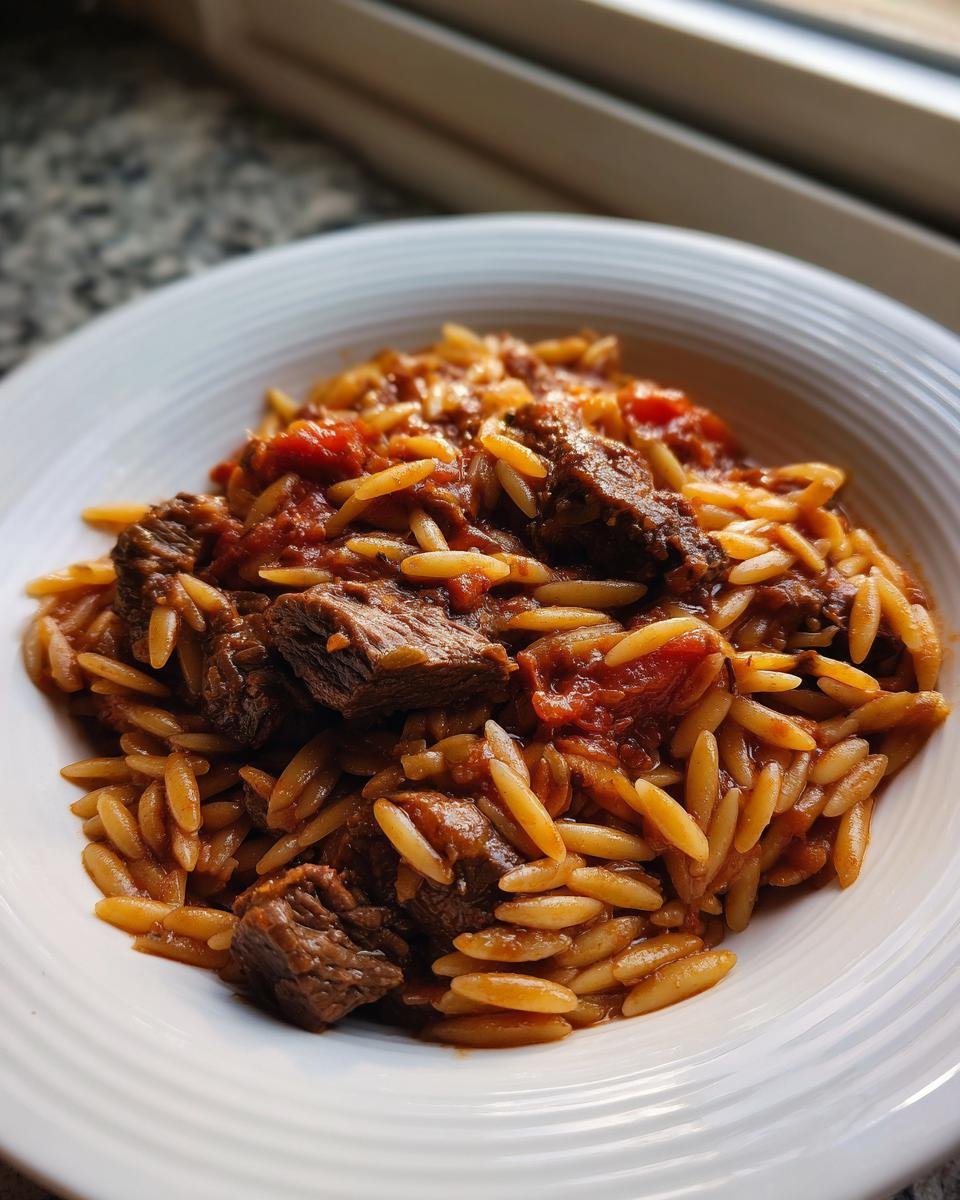
Browning the Beef for Rich Beef Giouvetsi Flavor
I know it’s tempting to rush this part, especially when you’re hungry and the kitchen smells amazing even just from the onions cooking, but seriously, DON’T CROWD THE PAN! If you stack the beef cubes on top of each other, the temperature drops, and you end up boiling the meat instead of creating a proper crust. That crust, created by the Maillard reaction, is what gives your final **Beef Giouvetsi** that deep, savory backbone flavor. Work in small batches, let the meat sit until it easily releases from the bottom of the pot when you try to turn it, and you’ll build the best foundation. It’s worth the extra plate work, trust me!
The Slow Bake: Achieving Tender Beef in Beef Giouvetsi
This is the marathon part of our race! Once everything is simmering gently in the Dutch oven, you slide it into that 350°F oven. This temperature is perfect because it’s hot enough to break down the tough collagen in the chuck, but not so hot that the tomato sauce scorches on the bottom before the meat yields. You are waiting for fork-tender beef—I mean, so tender that if you nudge it with a fork, it practically falls apart on its own. This usually takes a solid 1.5 to 2 hours, depending on how small your cubes are. Don’t rush this phase for your **Beef Giouvetsi**!
Finishing the Beef Giouvetsi with Orzo
This step turns your standard braised beef into the authentic Greek dish! Once the beef is perfectly done, you need to get that orzo in there. Remember, we aren’t cooking the orzo separately; it’s going to cook *in* the sauce. Stir it well so every little grain is swimming in that rich red liquid. Then, you return it to the oven, but this time, take the lid off. Why uncovered? Because we need some of that liquid to evaporate so the sauce thickens up beautifully around the pasta. That final uncovered bake (about 15–20 minutes) is what makes the texture of your **Beef Giouvetsi** so legendary!
Tips for Success When Making Beef Giouvetsi
Even though this **Beef Giouvetsi** recipe is pretty straightforward once you get the hang of it, a couple of professional tricks can really elevate it from ‘great’ to ‘the best Greek dinner ever.’ Honestly, it’s usually about the tools you use and a tiny bit of planning ahead. Don’t skip these little insights!
First up, let’s talk equipment. You absolutely must use a heavy, oven-safe pot, like a Dutch oven. A standard baking dish just won’t cut it for this one. Why? Because you need that heavy bottom to withstand the initial stovetop searing of the beef and onions without scorching, and the thick walls distribute the heat evenly during that long, slow bake in the oven. If the heat fluctuates too much, you risk burning the bottom layer of tomatoes while the top of the beef is still tough. My cast iron Dutch oven is the MVP for this recipe—it holds heat like a dream.
My second crucial tip is all about prep, which saves you major stress later! You can completely season and brown all the beef the day before. Seriously! Just seal it up tight in a container in the fridge after you’ve browned it. Then, the next day, you just reheat your pot with the oil, sauté the onions, deglaze with the wine, and toss the cold beef right back in with the liquids. This makes the cooking process the next day feel incredibly fast, even though the total time is long. It’s basically two easy steps instead of one big marathon cooking session. If you are learning how to avoid kitchen mistakes, learning to break down prep like this is how you guarantee homemade perfection!
Finally, when you add the orzo in that second baking stage, resist the urge to stir it constantly while it’s in the oven. Stirring too often during that final 15 minutes releases too much starch too soon, and you end up with a gluey mess instead of defined orzo grains suspended in sauce. Give it one good stir right after you put it in, and then one final stir before you pull it out. Simplicity wins, my friends!
Serving Suggestions for Your Beef Giouvetsi
Even though this **Beef Giouvetsi** is a complete meal all on its own—we’ve got the tender meat AND the pasta soaking up all that sauce—it’s Greek food, and Greeks always feel the need to serve it with something fresh on the side, right? You want something bright to cut through the richness of that slow-cooked tomato and wine sauce. I love keeping the sides super simple so the amazing flavor of the Giouvetsi really shines through.
My absolute favorite pairing is a big, crisp cucumber and tomato salad. We’re talking cucumbers, tomatoes, maybe some thinly sliced red onion, and tons of good olive oil, maybe a splash of red wine vinegar, and a sprinkle of dried oregano, just like we used in the stew itself. It’s so refreshing.
Another easy win is some lightly steamed green beans tossed quickly with lemon juice and a pinch of salt. Or, if you’re feeling ambitious, serve it alongside some fantastic homemade bread for dipping. You need something to mop up every last bit of that sauce pooling around the orzo! My classic Italian salad recipe works perfectly here, too, if you want something a little more substantial on the side.
Just remember, the star is that gorgeous, slow-baked **Beef Giouvetsi**, so don’t overcomplicate the supporting cast!
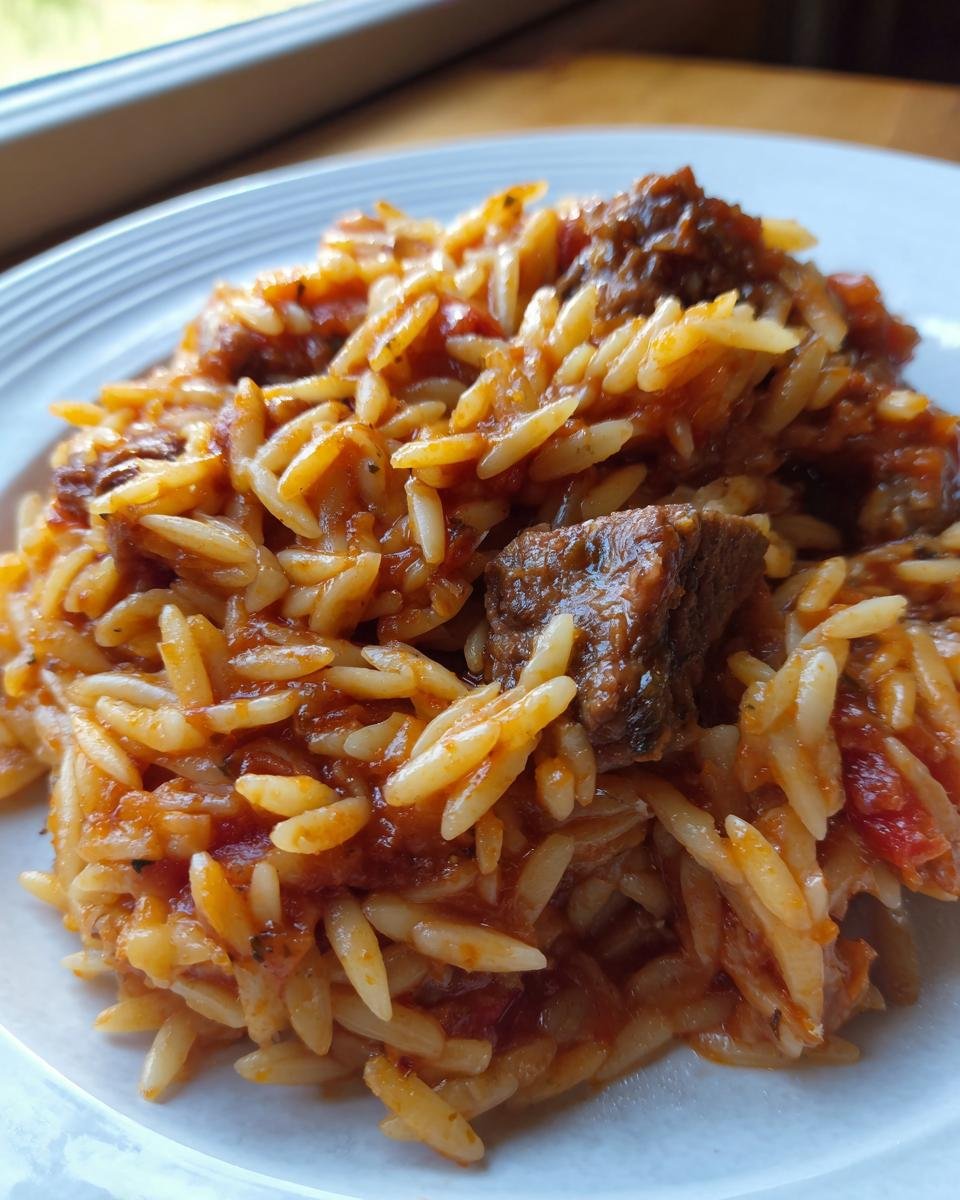
Storage and Reheating Your Leftover Beef Giouvetsi
One of the best parts about making a huge, comforting dish like this **Beef Giouvetsi**? The leftovers! Seriously, this baked orzo dish tastes even better the next day once all those beautiful tomato and wine flavors have had a chance to fully mingle with the meat and the pasta. It’s like the flavor profile matures overnight, which is the dream, right?
When it comes to storing it, keep it simple. You want to cool the pot down to room temperature pretty quickly after you’ve served the first night’s portion. Then, transfer any remaining Giouvetsi into an airtight container. Glass is my favorite because I can see what’s inside, but any sturdy container works. It should keep wonderfully in the fridge for about three to four days. If you’re planning ahead, this is a lovely dish to make on a weekend and use for easy weekday lunches. It freezes beautifully too, if you have the space!
Here’s the deal on reheating, though, because orzo can be tricky. Since the pasta absorbs so much moisture during that final bake, it can get a little thick and dense when cold. When you reheat it, you MUST splash in some extra liquid. I usually grab a little beef broth or even just water—about a tablespoon or two for a single serving size.
If you’re using the microwave, heat it in bursts, stirring well in between, and adding that splash of broth. If you reheat it gently on the stovetop in a little saucepan, stir frequently over low heat until it loosens up and gets creamy again. Don’t crank the heat up high, or you’ll end up sticking the pasta to the bottom! For a really nice reheat, I sometimes make a quick pan gravy using leftover bits to help loosen things up, just like you would if you were reviving any other rich meat sauce. You can look up how to make simple make-ahead gravy to get that same richness if you’re trying to save some leftovers for dipping bread!
Frequently Asked Questions About Beef Giouvetsi
I’ve had so many great questions pop up in my comments after people try this stew, and honestly, I love hearing how everyone adapts it! Since this is such an old traditional dish, there are always a few things folks wonder about before they start. Here are some of the common questions I get about making this ultimate Greek orzo dish.
Can I make Beef Giouvetsi in a slow cooker instead?
Oh, you totally can bring the flavor base to the slow cooker! If you do the browning, sautéing the onions, and the wine reduction right on the stove first, you can throw everything—the beef, tomatoes, broth, and herbs—into the crockpot. Cook it on low for about 7 or 8 hours until that beef is just melting. The tricky part is the orzo. Because slow cookers don’t allow for the liquid to evaporate nicely, if you add the orzo right into the slow cooker, you’re probably going to get soupier results. I suggest pulling the beef out, simmering the sauce on the stovetop in a pot until it reduces slightly, and then stirring in the orzo to cook for those final 15 minutes on the stove. It’s a hybrid method, but it works wonders!
What is the best cut of beef for Beef Giouvetsi?
If you want that melt-in-your-mouth magic that defines a great **Beef Giouvetsi**, you need to stick with beef chuck, roast, or maybe short ribs if you’re feeling luxurious. Fattier, tougher cuts are the absolute best friends of a slow braise. They have tons of connective tissue, which breaks down into rich gelatin when it cooks for two hours in liquid. That gelatin is what gives your sauce body and keeps the meat impossibly moist. Skip the lean cuts like sirloin here; they just dry out and get stringy when you bake them that long. If you’re looking for other pasta recipes that feature super tender meat, you might want to check out my recipe for creamy garlic parmesan orzo, just to see what else you can do with small pasta!
Another great question I get all the time is whether you can use dry pasta other than orzo. Yes! You can substitute the orzo with ditalini pasta or even small star pasta, though you might need to adjust the final liquid slightly based on what brand you use.
Nutritional Estimates for Beef Giouvetsi
Now, I know some of you amazing cooks track macros or just like to know what you’re putting into your body, even when you’re eating something super hearty like this **Beef Giouvetsi**. Because this recipe is slow-cooked and relies on simple, whole ingredients—beef, tomatoes, and pasta—it actually comes out fairly well-balanced!
I plugged all our ingredients into my usual calculator, and the numbers came out looking pretty great for a rich main course. Remember, though, these are just estimates, and they change wildly based on the specific type of beef you use and if you skip that optional cheese topping. If you’re looking for tips on how to tweak meals to fit a lighter lifestyle, you should absolutely look at my high-protein recipes, like this one on how to lose 1 lb of fat!
Here’s the breakdown, just for reference, based on six generous servings:
- Calories: Around 550 per serving
- Protein: Hearty at 48 grams! That beef really packs a punch.
- Carbohydrates: About 45 grams (that’s mostly from the delicious orzo).
- Fat: Roughly 22 grams total, with 8 grams coming from saturated fat.
- Cholesterol: About 120 mg.
See? Packed with protein, which is what I love about a good beef braise. It’s a satisfying meal that keeps you full for hours. It’s comfort food that actually feels good to eat!
Share Your Greek Comfort Food Creations
There you have it, friend! You now have everything you need to bring this incredible, warming **Beef Giouvetsi** right into your own kitchen. It’s become such a cherished part of our rotation, and I truly hope it does the same for you and your family. There’s just something so satisfying about pulling a massive, bubbling pot of tender beef and pasta out of the oven!
I really, really want to know what you think! If you give this recipe a go, please don’t be shy—head down to the comments section below and leave me a star rating. I want to hear all about your experience, especially how tender your beef turned out and if you added any secret ingredients of your own.
Did the wine reduction work perfectly? Did the orzo absorb just the right amount of liquid? Sharing your success stories (and even your little kitchen mishaps—we all have them!) helps everyone else feel confident enough to try this authentic Greek baked beef and orzo dish. If you’re looking for more honest, tested recipes straight from my kitchen to yours, you know where to find me! Head over to the About page to see what inspires me next. Happy cooking, and enjoy every single bite of that amazing **Beef Giouvetsi**!


Beef Giouvetsi
- Total Time: 2 hours 50 min
- Yield: 6 servings 1x
- Diet: Low Fat
Description
A traditional Greek baked beef and orzo dish.
Ingredients
- 2 lbs beef chuck, cut into 1-inch cubes
- 2 tablespoons olive oil
- 1 large onion, chopped
- 2 cloves garlic, minced
- 1 (28 ounce) can crushed tomatoes
- 1 cup dry red wine
- 2 cups beef broth
- 1 teaspoon dried oregano
- 1 bay leaf
- 1 cup orzo pasta
- Salt and black pepper to taste
- 1/2 cup grated Kefalotyri or Parmesan cheese (optional)
Instructions
- Season the beef cubes generously with salt and pepper.
- Heat the olive oil in a large pot or Dutch oven over medium-high heat. Brown the beef on all sides in batches; remove and set aside.
- Add the chopped onion to the pot and cook until soft, about 5 minutes. Add the garlic and cook for 1 minute more.
- Pour in the red wine and let it reduce by half, scraping up any browned bits from the bottom of the pot.
- Return the beef to the pot. Add the crushed tomatoes, beef broth, oregano, and bay leaf. Bring the mixture to a simmer.
- Cover the pot and transfer it to a preheated oven at 350°F (175°C). Bake for 1.5 to 2 hours, or until the beef is very tender.
- Remove the bay leaf. Stir in the orzo pasta. If the mixture seems too thick, add a little more broth or water.
- Return the pot to the oven, uncovered, and bake for another 15 to 20 minutes, or until the orzo is cooked and has absorbed most of the liquid.
- Stir well before serving. Sprinkle with cheese, if using.
Notes
- You can brown the beef in advance to save time on the day you cook.
- Use a heavy, oven-safe pot for best results.
- Prep Time: 20 min
- Cook Time: 2 hours 30 min
- Category: Main Course
- Method: Baking
- Cuisine: Greek
Nutrition
- Serving Size: 1 serving
- Calories: 550
- Sugar: 8
- Sodium: 450
- Fat: 22
- Saturated Fat: 8
- Unsaturated Fat: 14
- Trans Fat: 0
- Carbohydrates: 45
- Fiber: 5
- Protein: 48
- Cholesterol: 120
Keywords: beef, giouvetsi, greek, orzo, baked beef, stew