
Okay, let’s talk luxury. Forget everything you think you know about weeknight dinners for a minute, because we are diving headfirst into pure, unadulterated comfort food: the most incredible, decadent, and frankly, show-stopping Creamy Lobster Risotto you will ever make at home. I know, risotto sounds scary—all that constant stirring! But honestly, once you get the rhythm down, it’s wonderfully therapeutic. For years, I struggled; my rice was always too soupy or too starchy, until I figured out the trick to marrying the starch with the perfect hot stock. This recipe is the result of about fifty disastrous (but delicious) attempts, and trust me, this method guarantees that rich, velvety texture that makes you close your eyes on the first bite. It’s worth every single minute of attention you give it!
Why This Creamy Lobster Risotto Recipe Works
I promise you, this isn’t one of those fiddly, complicated meals that looks great on paper but turns into a sticky mess on the stove. We’ve streamlined the classic Italian technique so you can actually enjoy the process!
- The slow, steady addition of hot stock ensures maximum starch release, giving you that signature velvety texture without needing loads of heavy cream. It’s pure rice magic!
- We only use a touch of high-quality Parmesan and butter right at the end. This simple finishing move, called *mantecatura*, locks in richness and shine.
- Because we use amazing lobster stock (or a great seafood bisque if you have extra!), the flavor isn’t just surface level; it permeates every single grain of Arborio rice.
You’re going to nail this! It’s all about patience, not complicated ingredients.

Essential Ingredients for Perfect Creamy Lobster Risotto
Look, you can’t make magic without the right tools, and for this dish, the ingredients are everything. I’ve listed everything you need below, but seriously, do not skimp on the stock! That’s the heart of the entire **Creamy Lobster Risotto** experience.
- One tablespoon of olive oil—just regular good quality stuff is fine here.
- One small onion, and I mean *finely chopped*. No big chunks allowed; we want it to melt away!
- Two cloves of garlic, minced up nice and small for fragrance.
- One and a half cups of Arborio rice. This high-starch rice is non-negotiable for the texture!
- Half a cup of dry white wine. Something crisp you’d actually drink.
- Six cups of hot lobster stock or fish stock. Keeping this simmering gently is key! If you’re feeling extra fancy, you can check out my recipe to make broiled lobster tails and use those shells for the richest homemade stock imaginable.
- One pound of cooked lobster meat, chopped into bite-sized pieces.
- Half a cup of grated Parmesan cheese—freshly grated, please!
- Two tablespoons of unsalted butter—the real stuff only!
- Salt and black pepper for tasting at the end. That’s it!
Equipment Needed for Your Creamy Lobster Risotto
You don’t need a ton of fancy gadgets for this, but you do need a few workhorses that can handle the texture and the time commitment. If you show up to make risotto with a flimsy little saucepan, you’re going to have a bad time—trust me!
Here is the small list of tools that become absolutely essential when you’re making perfect **Creamy Lobster Risotto**:
- A Large, Heavy-Bottomed Pot: This is crucial! It needs to hold the rice, the stock, and have enough surface area for steady evaporation. A Dutch oven or a good stockpot works wonderfully here. It helps distribute that heat evenly so you don’t get scorched bits at the bottom.
- A Ladle (or two!): You’ll be using this constantly to transfer that hot stock ladle by ladle. Having a dedicated ladle makes the process smooth instead of clumsy.
- A Sturdy Wooden Spoon: Yes, a wooden spoon! I’ve tried silicon spatulas, but the wooden spoon seems to scrape the sides and bottom of the pot just right to release all that glorious starch from the Arborio rice. It’s my secret weapon for the best outcome.
- A Small Saucepan: You need a vessel dedicated solely to keeping your 6 cups of stock steaming hot on a back burner. If the stock you add cools the rice down, you halt the cooking process, and that’s when things go wrong.
- A Good Sharp Knife and Cutting Board: For dicing up that beautiful onion and that sweet lobster meat. Make sure those onions are *tiny*!
See? Not an intimidating list at all! Just good, solid kitchen basics are all it takes to create this incredible seafood rice.
Step-by-Step Guide to Making Creamy Lobster Risotto
This is where the action happens! Mastering the technique for this **Creamy Lobster Risotto** is all about managing heat and moisture with a little bit of stirring dedication. Remember the golden rule for risotto: your stock absolutely *must* be hot the entire time. If you let that stock cool off, you shock the rice, and it refuses to release that beautiful internal starch we’re aiming for. Keep it happy and simmering gently on a back burner!
I usually put on some good background music during this stage because you’re going to be standing there for a good 25 minutes, but honestly, that slow, consistent stirring is what separates good risotto from the phenomenal stuff. It’s almost meditative!
Sautéing Aromatics and Toasting the Rice
We start low and slow to build the flavor foundation. Get that tablespoon of olive oil humming over medium heat in your heavy-bottomed pot. You want it warm enough to make the onions soft but not so hot that they take on any color!
- Toss in that tiny, finely chopped onion. Let it sweat until it’s completely translucent and soft, which takes about five minutes. We don’t want any crunch here.
- Next, the garlic comes in. That only needs about 60 seconds—just until you can really smell it filling your kitchen. Don’t let it brown, or your whole dish turns bitter!
- Now, the star of the show: the Arborio rice. Dump it right in there and toast it for a full two minutes, stirring it constantly. You’ll notice the edges of the grains starting to look a little clear or glassy. This ‘toasting’ step seals the outside of the starch so it doesn’t dissolve too quickly and holds that perfect al dente bite later on.
Incorporating Wine and Building the Creamy Lobster Risotto Base
This step adds a lovely layer of acidity that cuts through the richness of the lobster later. Pour in that half cup of dry white wine. The pan will hiss and steam, which is exactly what you want!
It is absolutely essential that you stir until all that wine has been completely absorbed. I mean *gone*. If you rush this and start adding stock while there’s still pooling wine, the flavor won’t develop right, and the rice texture will be off. Wait until the bottom of the pot looks dry right before the next stage begins.
The Slow Stir: Achieving Perfect Al Dente Creamy Lobster Risotto
Here’s the commitment phase! Take one ladleful of that hot stock—just enough to cover the rice—and add it to the pot. Now, you stir. You don’t have to stir like a maniac, but keep the rice moving constantly against the bottom of the pot. This friction releases starch.
Once that ladle of stock is completely gone—absorbed, evaporated, whatever you want to call it—add another ladleful. Rinse and repeat this entire process for what feels like forever, but usually only takes about 20 to 25 minutes total. You are looking for the rice to be creamy on the outside but still have a tiny, firm bite in the very center. That’s al dente Italian perfection!
Finishing Touches: Adding Lobster, Butter, and Seasoning
When the rice is creamy but still structured, it’s time to stop adding stock. You might end up using a bit more or less than the six cups listed, so trust the texture, not the clock, at this point.
- Stir in your already cooked and chopped lobster meat right now. We add it last because we just want to warm it through, not cook it further! Also, mix in the Parmesan cheese and the two tablespoons of cold butter. This final mixing step is important; it creates the signature silkiness. If you want a real restaurant-level finish, consider reading up on how to make incredible lobster salad beforehand, just to get your lobster prep polished!
- Give it a taste! Add salt and pepper until you think it sings. Remember, if you used salty stock or salty Parmesan, you might need less salt than you think.
Serve it immediately! Risotto waits for no one, especially when it’s packed with luxury like butter-poached lobster!
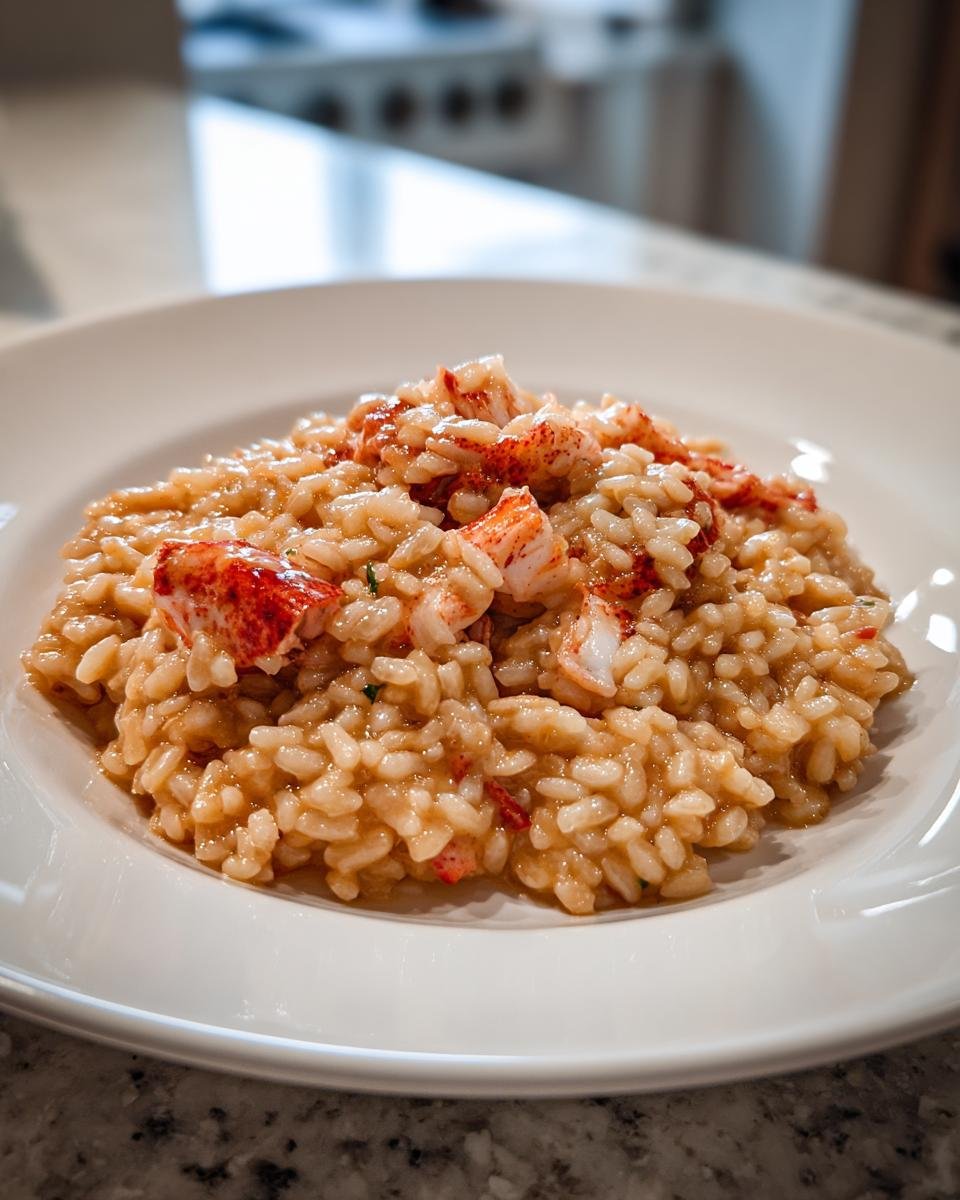
Tips for the Best Creamy Lobster Risotto Texture
You’ve nailed the process, but achieving that truly show-stopping, flowing-off-the-spoon texture—that’s what separates a good risotto from one that makes your guests rave for weeks. It’s all in the finish, honey!
First, let’s talk about technique, even though the Italians have a fancy word for it: *mantecatura*. It’s what you do right at the end when you turn off the heat and vigorously mix in that last bit of cold butter and the Parmesan cheese. You have to beat it in quickly! This vigorous mixing emulsifies the fats with the starch suspended in the liquid, and *that* creates the unbelievable creamy coating around every grain of rice. Don’t be shy; give it a good 30 seconds of hard work right off the flame. Do this step too early while it’s still on the heat, and the cheese just gets stringy, not silky smooth.
Secondly, the stock temperature is vital. I mentioned it before, but I’m saying it again because it’s the biggest mistake rookies make: keep that stock on the back burner at a gentle, steady simmer—just below boiling. If you add cold stock, you stop the starch from releasing properly, and your rice ends up tasting dull and heavy. It needs that consistent, gentle heat bath ladle after ladle.
I sometimes like to add a tiny splash of reserved lobster cooking water, if I happen to have made fresh broiled lobster tails, right at the very end along with the butter. That natural salinity and concentrated flavor just boost the whole experience. It adds depth that even the best quality purchased stock sometimes misses. Trust me, these little tweaks are what turn your **Creamy Lobster Risotto** from great to unbelievably luxurious!
Ingredient Notes and Substitutions for Creamy Lobster Risotto
Every recipe has its star players, and when we’re making something as special as this **Creamy Lobster Risotto**, the quality of the ingredients dictates the final result. But let’s be real, not everyone has a giant seafood market across the street, so let’s talk substitutions! I want you to be able to make this deliciousness whenever the craving strikes.
The biggest question I always get is about the stock. If you can’t get liquid gold—aka, hot lobster stock—don’t panic! You absolutely must use something hot, but you have options. A high-quality fish stock is the next best thing. I aim for something with a decent body, not just salty water. If fish stock isn’t available, a good vegetable stock will work in a pinch, especially since we are boosting the flavor so much with that wine, the Parmesan, and of course, the actual lobster meat.
Just know this: If you sub out the lobster stock, the final dish won’t have that deep, oceanic backbone. It will still be creamy and good, but it won’t be the showstopper you dreamed of. It’s a trade-off, but sometimes you have to take it!
Now, let’s talk cheese. I specified Parmesan, but if you’re out, Pecorino Romano works, but wow, is it sharp! Use about half what you would use for the Parmesan, or it will completely overpower the delicate lobster flavor. I prefer the more mellow, nutty flavor the Parmesan brings to a rich seafood rice dish like this. Also, please, please try to use real, block Parmesan that you grate yourself. The pre-shredded stuff has anti-caking agents that dissolve oddly in risotto, and we want smooth, not slightly gritty, when we finish!
And finally, the lobster itself. If you are using previously cooked, frozen, or fresh lobster meat, make sure it’s thawed completely and cut into bite-sized chunks. We are folding it in at the very end just to heat it through, so we don’t want it tasting rubbery or dry when you serve it piping hot!
Serving Suggestions for Your Creamy Lobster Risotto
Phew! You just made the most luxurious, decadent thing to ever come out of a pot. Now, what do we serve with this masterpiece? Because this **Creamy Lobster Risotto** is so rich, heavy, and intensely flavored—thanks to that lobster stock and butter—we want everything else on the plate to take a backseat and offer a little contrast, you know? No need to compete with that gorgeous seafood!
The absolute number one thing I recommend pairing with this is simplicity. You want something light, acidic, and maybe a little green to cut right through that heavenly starch and fat. Forget heavy sides; they’ll weigh you down immediately!
First, the wine! You absolutely need a crisp, dry white wine poured into your glass. Something with good acidity to cleanse the palate between bites. A Sancerre, a sharp Pinot Grigio, or even a good dry Prosecco works wonders. It’s like a little palate reset button every time you take a sip after a mouthful of rich rice.
For a side salad, keep it equally minimalist. I used to love just tearing up some tender butter lettuce and tossing it with a sharp lemon vinaigrette made with really good olive oil. That little acidic pop keeps the risotto feeling special rather than overwhelming. If you want a slightly more structured option, I actually have a recipe for my Big Classic Italian Salad that works surprisingly well, provided you keep the dressing light and bright—lots of fresh herbs, not too much cheese!
You don’t need much else. Maybe a simple garnish of fresh parsley, chopped delicately, just for color contrast on top of that creamy golden mound. But truly, this **Creamy Lobster Risotto** is designed to be the main event. Let it shine, and give your guests something crisp to sip alongside it!
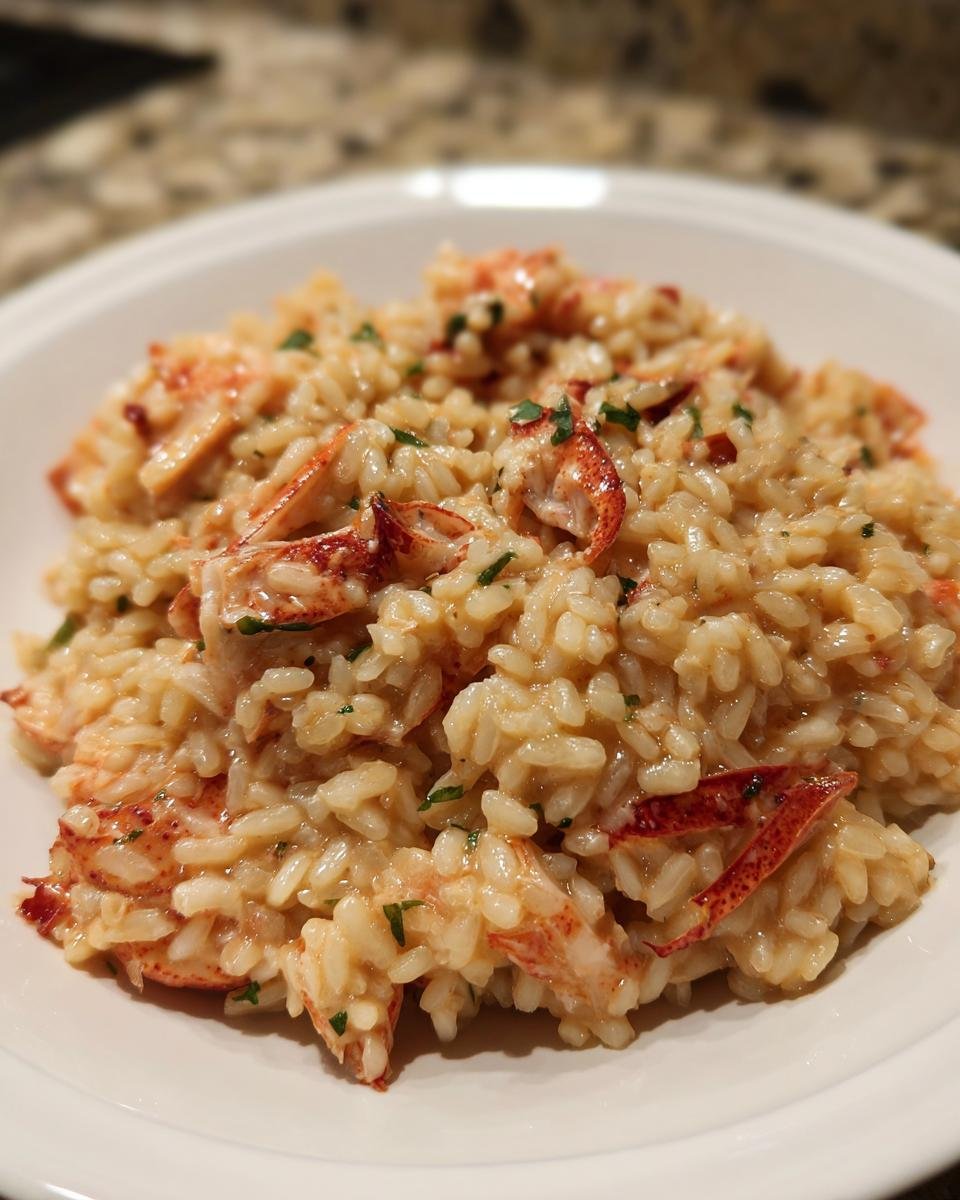
Storage and Reheating Creamy Lobster Risotto
Oh, risotto and leftovers—that’s the classic romantic comedy of Italian cooking, isn’t it? You finish this beautiful **Creamy Lobster Risotto**, you’re ecstatic, and then you realize you have two servings left over. Don’t despair! Risotto changes character dramatically once it heads to the fridge, and that’s just science at work. That beautiful, flowing starch essentially settles down, tightens up, and turns into a beautiful—but solid—brick overnight.
You absolutely have to store it correctly. Get that leftover risotto into an airtight container right away. If you leave it sitting out on the counter for ages before putting it away, it just gets stickier and less enjoyable later. Store it in the fridge for up to two days, tops. After that, the texture starts getting weird, and nobody wants sad seafood rice.
Now, reheating is where you need a strategy. You cannot, I repeat, *cannot* just microwave that brick straight from the fridge. It will become gluey and hard! The trick, and this is the one you need to remember, is adding liquid back in to persuade that starch to loosen up again. When you scoop out the portion you want to eat, toss it into a small saucepan.
Add a splash of warm stock—if you don’t have leftover lobster stock, use water or milk in a pinch, but stock is always better! Heat it slowly over medium-low heat, stirring gently the whole time. You’re aiming to introduce moisture bit by bit until it returns to that creamy, flowing consistency you loved when it was first made. It’ll be super fast, maybe just five minutes. If you’re using a microwave, put your portion in a microwave-safe bowl and add that liquid, then microwave in 30-second bursts, stirring well between each burst, until it’s hot all the way through and suitably loose again. Don’t let it boil aggressively, or you’ll cook the lobster meat all over again, and nobody wants tough lobster!
Frequently Asked Questions About Lobster Risotto
I’ve gotten so many wonderful emails over the years about this **Creamy Lobster Risotto**, and I’ve pulled out the most common baking questions here. Please don’t hesitate to reach out if you have one I missed!
Can I use frozen lobster meat instead of fresh?
Oh, absolutely! That’s a totally realistic question. If you’re using frozen lobster meat, just make sure you thaw it completely in the refrigerator overnight. When it’s cooked, chop it up, but when you toss it in at the end (Step 6), make sure it’s completely at room temperature or slightly warmed. We only want to heat it through gently, not cook it again, or it’ll get rubbery fast. That’s the secret to keeping your seafood rice tender!
How do I stop my risotto from becoming gluey or sticky?
That stickiness happens when you overwork the rice or use a stock that’s too cool! The main reason your **Arborio rice** becomes gluey is usually one of two things: too much aggressive stirring in the beginning, or adding stock that isn’t happily simmering. Remember, the constant stirring releases the starch, but if you beat it too hard, you break the grains themselves. Keep that stock hot, stir with purpose but not violence, and things turn out creamy, not gummy.
I don’t have lobster stock—what is the absolute best substitute?
I totally get it; homemade lobster stock isn’t always an option! If you can’t make your own, always opt for the highest quality fish stock you can find. Better yet, if you have any shrimp shells or white fish bones lying around, toss them in some water with a carrot, celery, and onion, and boil that for 20 minutes to make a quick, flavorful homemade fish stock. It makes a huge difference in this **Creamy Lobster Risotto**!
How soon after making it should I serve the risotto?
Risotto waits for no one! Seriously, get this on the table immediately after you stir in the butter and cheese. Risotto continues to cook slightly off the heat, and the texture changes rapidly. If you wait 10 minutes, it will be significantly thicker and won’t have that beautiful “flowing” look that makes this dish so stunning. If you must wait, keep the pot barely warm and cover it tightly.
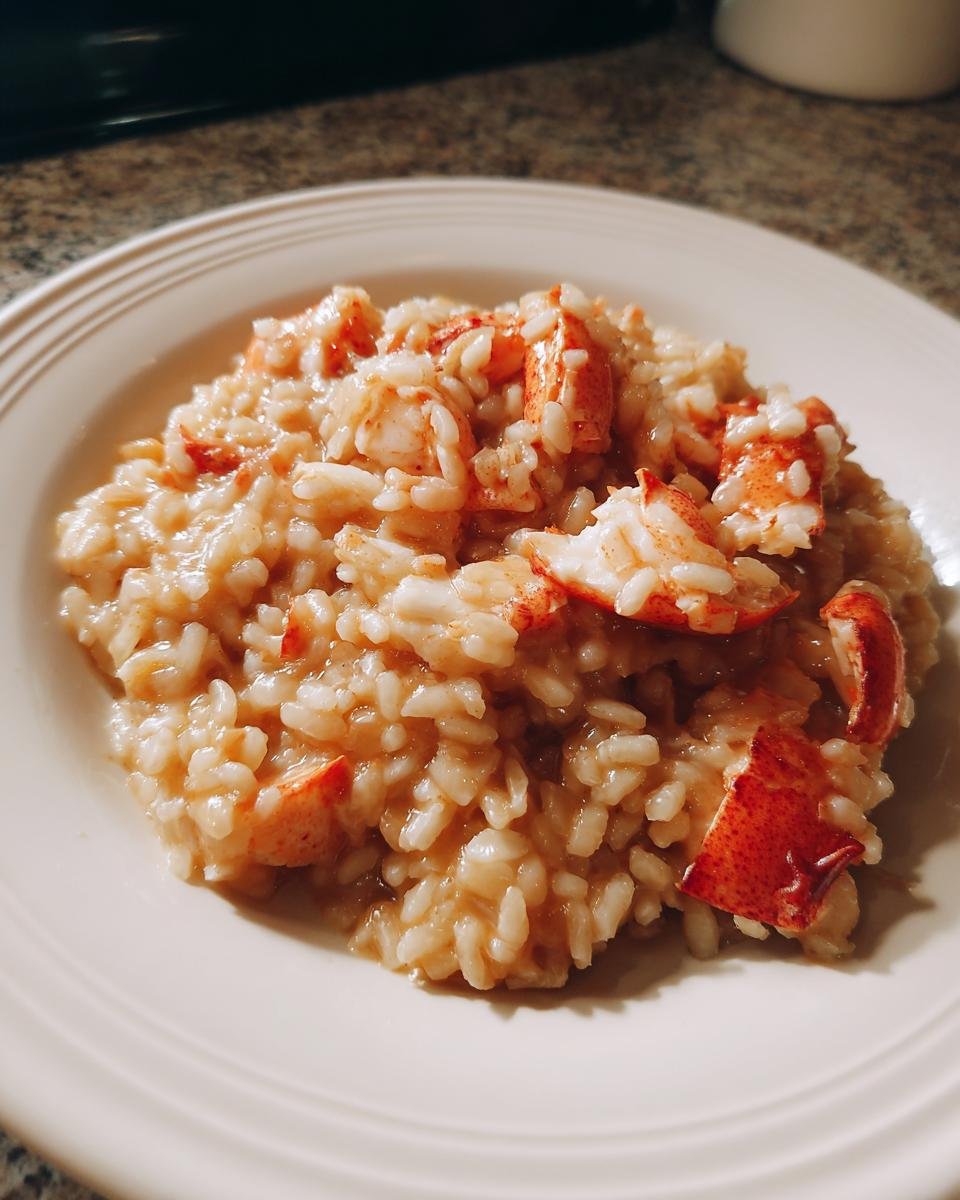

Creamy Lobster Risotto
- Total Time: 50 min
- Yield: 4 servings 1x
- Diet: Low Fat
Description
A rich and creamy risotto featuring tender pieces of lobster meat.
Ingredients
- 1 tablespoon olive oil
- 1 small onion, finely chopped
- 2 cloves garlic, minced
- 1 1/2 cups Arborio rice
- 1/2 cup dry white wine
- 6 cups hot lobster stock or fish stock
- 1 pound cooked lobster meat, chopped
- 1/2 cup grated Parmesan cheese
- 2 tablespoons unsalted butter
- Salt and black pepper to taste
Instructions
- Heat olive oil in a large, heavy-bottomed pot over medium heat. Add onion and cook until soft, about 5 minutes.
- Add garlic and cook for 1 minute until fragrant.
- Add Arborio rice and toast for 2 minutes, stirring constantly.
- Pour in white wine and cook, stirring, until fully absorbed.
- Add one ladleful of hot stock to the rice, stirring until the liquid is absorbed before adding the next ladleful. Continue this process until the rice is creamy and al dente, about 20-25 minutes.
- Stir in the chopped lobster meat, Parmesan cheese, and butter. Mix well.
- Season with salt and pepper to your liking. Serve immediately.
Notes
- Keep your stock simmering gently on a back burner while making the risotto.
- Stirring frequently helps release the starch from the rice, creating the creamy texture.
- Prep Time: 15 min
- Cook Time: 35 min
- Category: Main Course
- Method: Stovetop
- Cuisine: Italian
Nutrition
- Serving Size: 1 serving
- Calories: 550
- Sugar: 3
- Sodium: 650
- Fat: 18
- Saturated Fat: 10
- Unsaturated Fat: 8
- Trans Fat: 0
- Carbohydrates: 65
- Fiber: 2
- Protein: 35
- Cholesterol: 150
Keywords: lobster risotto, creamy risotto, seafood rice, Arborio rice, Italian seafood