
Listen, I get it. Mornings are chaos. Between trying to feed everyone and remembering where I put my keys, fancy breakfast plans usually go overboard. That’s why I’m obsessed with dishes that feel luxurious but take practically zero effort. If you’re feeling the same morning fatigue, these Baked Feta Eggs are about to be your new life hack. We’re talking about a cheesy, warm, baked Mediterranean dish that goes straight from the oven to the table, and honestly, the cleanup is almost nothing!
This recipe just screams ‘easy weeknight dinner’ meets ‘brunch vibes,’ which is perfect for those of us who can’t be bothered with frying pans before 9 AM. I first tried this when I needed a protein boost but only had about 25 minutes to spare, and seriously, it changed my breakfast game forever. You just need a little block of feta, some eggs, and a hot oven. Don’t even sweat the spices; we’ll talk more about that in a minute!
If you need a few extra ideas for using up that feta, check out my tips over here on savory feta toast recipes. But today, trust me, you want the oven heat working for you!

Why You Will Love Making Baked Feta Eggs
Seriously, this dish is just brilliant for busy people. I always have the main ingredients on hand, and knowing I can have something warm and delicious ready in under half an hour is key. It’s my secret weapon for looking like I put in way more effort than I actually did. Here are the main reasons you absolutely need to try this fast Mediterranean favorite:
- It’s lightning fast! We’re talking just 5 minutes of prep time. You basically just raid your fridge, drizzle some oil, and toss it in.
- The total time commitment is only 25 minutes. That means you can make this while you’re drinking your first cup of coffee—no juggling pans required.
- The flavor is incredible without being complicated. That salty feta melting into the olive oil with a little oregano? Pure Mediterranean sunshine right on your plate.
- Cleanup is a dream! Since everything bakes together in one small, oven-safe dish, you aren’t scrubbing three different skillets later. It’s bliss!
- It’s super versatile. You can bake the eggs however you like your yolks—runny or firm—and it still holds together beautifully. If you want more ideas for quick meals, check out my roundup of easy one-pan dinner recipes!
Essential Ingredients for Perfect Baked Feta Eggs
Okay, here’s where we make sure this recipe works magic. Because there are so few moving parts, every ingredient has to be right. If you’re using the wrong kind of cheese, you’ll just end up with a salty, oily mess instead of that dreamy, creamy base we’re looking for. Don’t worry, the list is tiny, and I’ve got the notes right here so you can grab exactly what you need.
You are going to need just five core things to get this going. Seriously, five! Having these on hand means you can whip up our amazing easy baked brunch ideas anytime inspiration strikes.
- 8 oz block feta cheese – and I mean a solid block!
- 4 large eggs – fresh ones are always best, they hold their shape better.
- 2 tablespoons olive oil – preferably a nice, fruity one if you have it.
- 1/4 teaspoon black pepper – freshly cracked if you can manage it!
- A tiny pinch of dried oregano – just enough to bring that Greek flavor.
Ingredient Notes and Substitutions
Let’s talk about that feta for a second. You absolutely want the block style, packed in brine, not the pre-crumbled stuff in a bag. The crumbled feta has anti-caking agents that keep it from melting into that smooth, luxurious pillow for the eggs. We need that solid block to support the eggs when we make our little nests.
If you happen to have a few cherry tomatoes rolling around in the crisper drawer when you pull out the feta, throw them in! Tuck maybe four or five around the edges of the cheese before you drizzle the oil. They burst while baking and add a lovely little pop of juiciness that complements the salty cheese so well. That’s my little secret addition when I’m feeling fancy!
Equipment Needed for Your Baked Feta Eggs
Since this is such a simple dish, you don’t need a massive arsenal of kitchen gadgets, which is another reason I love it so much! But you definitely need the right vessel to hold everything together while it bakes. Don’t skimp here; if your dish is too big, the eggs will just spread out and bake flat, and we want them nestled nicely in that salty cheese!
You’ll primarily need the following basics. Honestly, if I can make this on a chaotic Tuesday, you definitely can. For more tips on making weeknight cooking easier, take a peek at my ideas for quick 30-minute meals.
- An oven-safe baking dish. Think small! Something around 6×4 inches or a small oval au gratin dish works perfectly to hold that 8 oz block of feta snugly.
- Measuring spoons for your oil and for getting that perfect tiny pinch of oregano. Precision matters when you’re dealing with salt content!
- A regular metal spoon, specifically the back of it. This is key later!
- A sharp knife, just in case you need to trim your feta block slightly to fit your dish perfectly.
Step-by-Step Instructions for Baked Feta Eggs
This is where the magic happens, and I mean it when I say this is intuitive cooking. You don’t need to hover over the oven or worry about burning anything. The goal here is happy, melted feta and perfectly cooked eggs. For step one, make sure your oven is humming along nicely! We need it hot enough to set the whites while gently softening that feta block. If you need more timing secrets for the kitchen, check out my guide on getting food done in under 30 minutes.
Here’s the flow. Preheat your oven to 375 degrees Fahrenheit (that’s about 190 degrees Celsius). Get your little baking dish ready. We’re aiming for 15 to 20 minutes in the oven, depending on how runny you like those yolks. If you’re dipping bread, go for the lower end of that time!
- First thing: Crank that oven up to 375°F (190°C).
- Take your solid block of feta cheese and settle it right into the center of your oven-safe dish. It should fill most of the bottom.
- Drizzle those 2 tablespoons of olive oil evenly over the entire top of the feta. It will start soaking in right away.
- Sprinkle your black pepper and that little pinch of oregano right on top of the cheese and oil combo.
- Now for the key part that makes this recipe work so well: use the back of a metal spoon and gently press down four little spots, creating shallow dips or wells in the feta.
- Carefully crack one egg directly into each well you just made. Try not to break the yolks!
- Slide that dish into the preheated oven. Bake for about 15 to 20 minutes. Watch them!
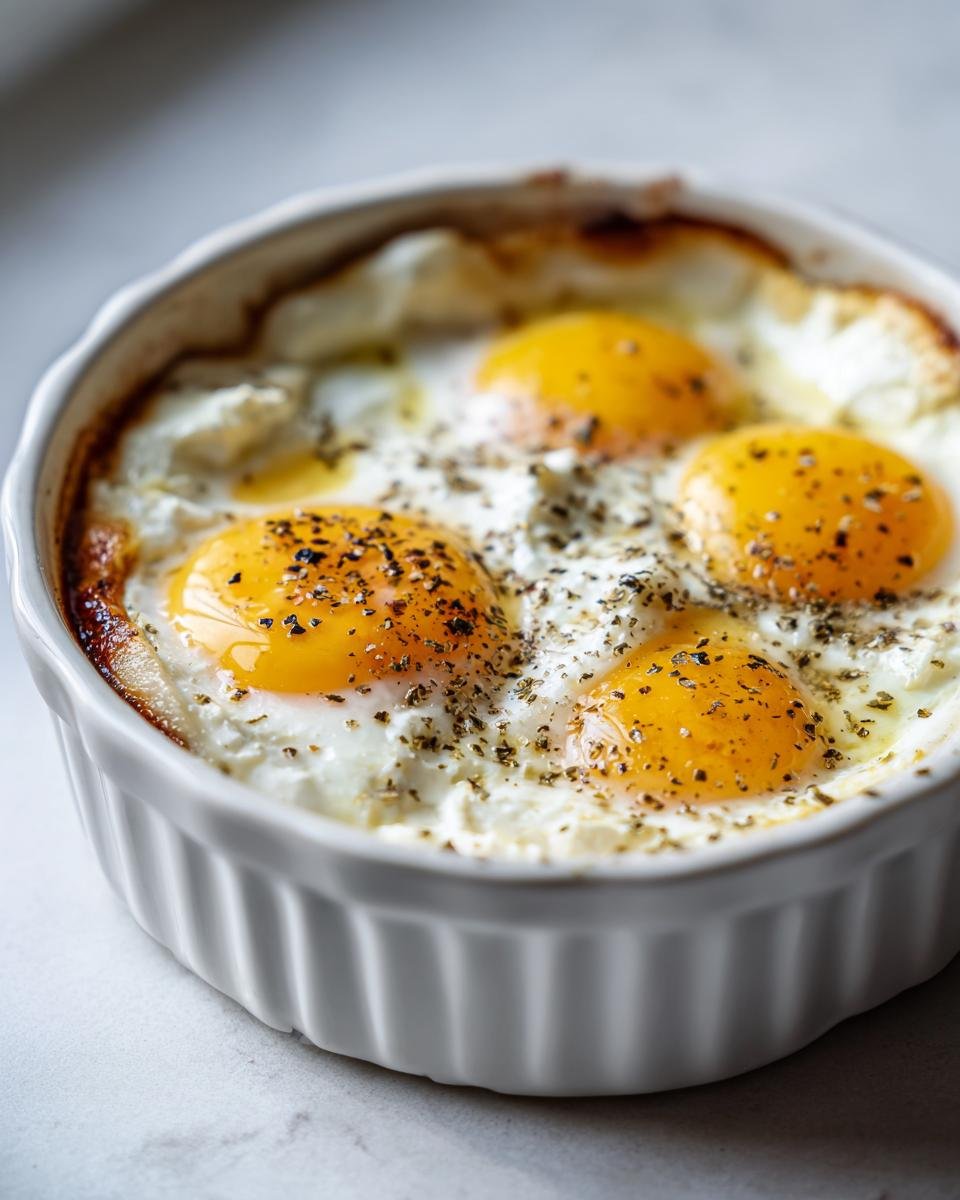
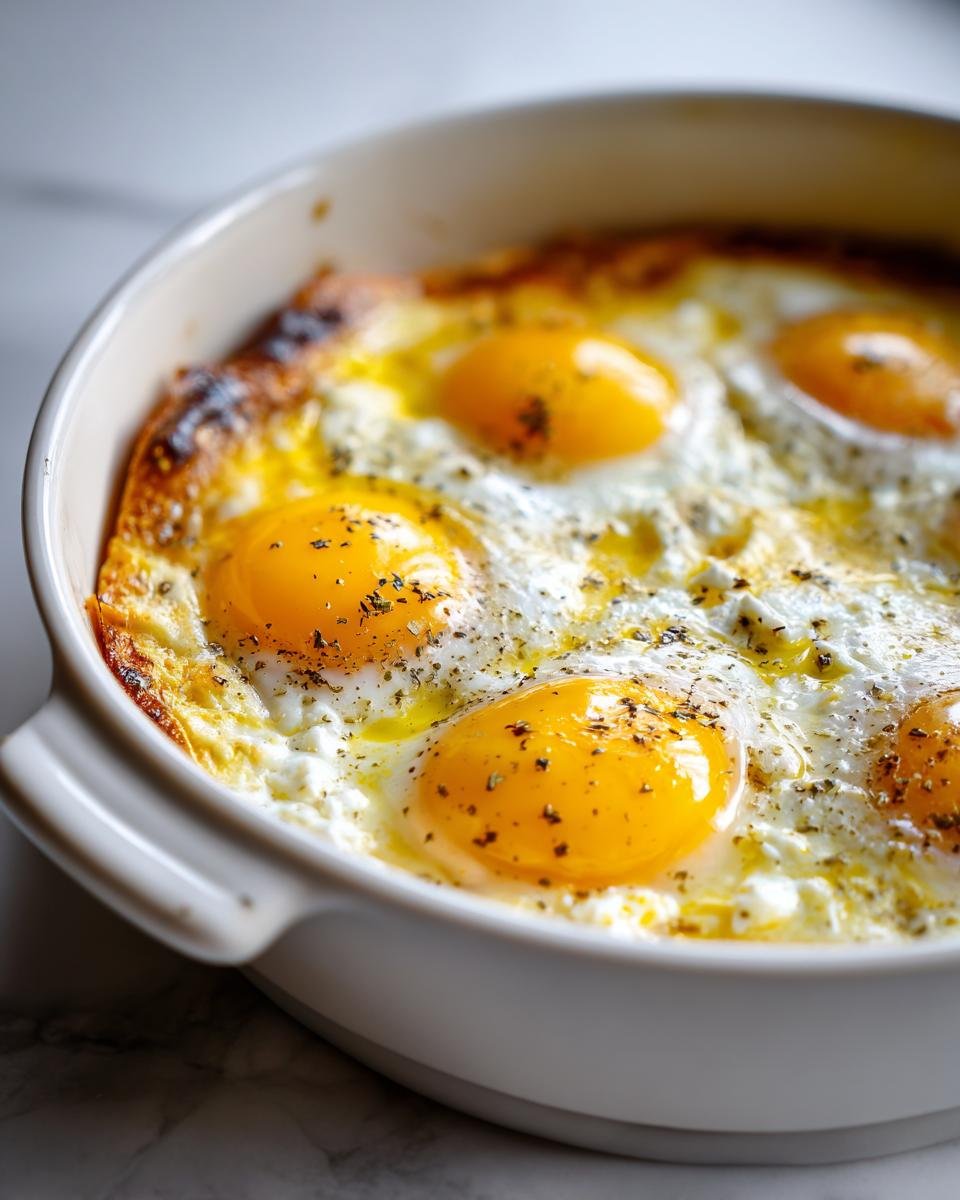
- Pull them out when the whites are opaque and set, but the yolks are still jiggly for that perfect dip factor. Serve it immediately!
Creating the Perfect Well for the Eggs
Don’t skip making those little nests! If you just crack the eggs on top of the flat feta block, by the time the cheese has warmed up and started to melt around the edges, the whites are going to spread everywhere, mixing into the oil. We don’t want that; we want distinct eggs sitting proudly on top of the melted cheese foundation.
To make the well, use the round back of a sturdy spoon. Press down firmly but gently. You only need to create a shallow dip—maybe half an inch deep—enough to hold the egg white in place while it sits. The feta is surprisingly sturdy when cold, so it holds the shape really well until the heat starts its work. This is what keeps the yolk centralized and lets you scoop out perfectly tempered eggs with salty cheese!
Tips for Achieving Perfect Baked Feta Eggs Every Time
Even though this dish is incredibly simple, there are a couple of little things I’ve learned over the years that take it from “good” to “I need to make this once a week.” Since we’re dealing with eggs, timing is everything! If you’re looking for more ways to master simple techniques, you should definitely look at my guide on foolproof methods for perfect baked dishes.
My biggest piece of advice centers around knowing when to pull them out. You’re not looking for a hard-boiled texture here; you want those beautiful, runny yolks for dipping!
- Check the Whites, Not Just the Yolk: When you peek into the oven around the 15-minute mark, focus on the egg white first. If the whites surrounding the yolk are still completely clear or wobbly, they need more time. You want the whites to look fully opaque and set before you even worry about the yolk’s texture.
- The Feta Test: I often pull the dish out for a quick gentle shake around the 17-minute mark. If the cheese underneath the eggs wiggles slightly but doesn’t look completely liquified and soupy, you’re golden. If your feta has melted down into a liquid pool and the eggs are sitting in it, it baked a little too long, and you might end up with slightly dry edges. We want soft, yielding cheese, not a cheese puddle!
- Use Room Temperature Eggs (If You Can): If you remember to pull your eggs out of the fridge about 20 minutes before you start, they cook more evenly. Putting four ice-cold eggs directly into a hot pan of cheese can stop the feta from heating up as fast as it should, leading to uneven cooking. It’s a small step, but it makes a difference with something as quick-cooking as this!
Serving Suggestions for Your Baked Feta Eggs
This dish is fantastic right out of the oven, steaming hot, and salty, but honestly, it’s only half the show! The real star of the performance is what you use to scoop up every bit of that melted feta creaminess and that perfect runny yolk. You absolutely have to serve this with something sturdy for dipping. I mean it—don’t try to eat this with a fork alone; you’ll miss the best part!
My number one go-to pairing, as you probably guessed, is crusty bread. Think a baguette that’s been sliced on a diagonal and popped under the broiler for three minutes until it’s just crisp on the edges. You want that bread to stand up to the oil and the cheese without immediately collapsing. If you are looking for other simple ways to elevate your morning routine, I have a few fun tips over on my best quick breakfast side dishes post!
But let’s get creative! Since this is leaning heavily into that salty, bright Mediterranean profile, here are a few other ways I love to plate this up:
- Pita Perfection: Warm up some soft pita bread. The pocket acts like a little scoop, and the bread soaks up the oregano-infused olive oil beautifully.
- Veggie Dippers: If you want to cut down on carbs, try dipping crisp cucumber slices or sturdy carrot sticks. It adds a nice, cool crunch against the hot, salty cheese.
- A Fresh Herb Finish: Before serving, sprinkle a generous amount of fresh herbs over the top. Parsley or a little bit of fresh dill—they just brighten everything up so much. It’s that finishing touch that makes everyone think you’re a culinary genius.
- Spice It Up: If you like heat (and I do!), drizzle a tiny bit of chili oil over the top along with the oregano. It adds a gorgeous red color and a little kick that cuts right through the richness of the egg yolk and feta!
Storing and Reheating Leftover Baked Feta Eggs
Okay, let’s be real. This recipe is designed to be eaten right out of the oven! Those runny yolks and melty feta are really best experienced within about five minutes of coming out of the oven. However, if you’re anything like me and you make a big batch because you want an easy lunch the next day, you absolutely can store the leftovers. You just need to treat them gently because eggs and cheese can change texture fast once they chill down.
If you do have leftovers—maybe you’re eating this solo or you just couldn’t finish the whole dish—don’t toss it! Store it right in that original oven-safe baking dish, provided it has a lid, or transfer the portion you want to save into an airtight container. Feta and eggs are best kept refrigerated for only about two days maximum. Any longer and you risk drying out that cheese too much.
Reheating is where you have to be careful; nuking eggs can make them rubbery in a heartbeat. I have two trusted methods depending on how much time I have to nurse my leftovers back to life before jumping into my other projects, like checking out quick and easy kitchen hacks!
The Best Way to Reheat Baked Feta Eggs in the Oven
If you have a little patience, the oven is your best friend for getting that creamy texture back. This method lets the residual moisture steam a little, keeping the yolks from getting tough. Transfer the leftovers to an oven-safe dish if they aren’t already in one. Cover the dish tightly with aluminum foil.
You want a nice, low heat here—think warm, not hot. Set your oven to about 300°F (150°C). Let it warm up slowly for about 10 to 15 minutes. The foil traps the steam, which helps coax the cheese back to life without boiling the eggs. Check at the 10-minute mark; you want the feta soft enough to pierce with a fork.
The Quick Microwave Fix (Use Caution!)
Sometimes, I’m running late, and I just need it done *now*. The microwave is fast, but it’s aggressive, especially with dairy and eggs. You need to use short bursts and low power if possible.
Place a small portion on a microwave-safe plate. Cover it loosely with a damp paper towel. The dampness is crucial—it adds a bit of steam to counter the microwave’s drying effect. Heat on 50% power for 30 seconds. Check it. If it needs more heat, do 15-second intervals at 50% power until warmed through. Stop heating *before* it feels piping hot, because residual heat will finish the job, and trust me, you do not want rubbery feta!

Frequently Asked Questions About Baked Feta Eggs
When people try this recipe for the first time—or even the tenth time—they usually have a few small questions pop up about substitutions or expectations. It’s a simple recipe, but those little details can make a big difference in getting that *perfect* taste. If you’re curious about ramping up your Mediterranean breakfast repertoire, I wrote a whole guide about making the most of feta cheese that you might want to browse later!
Can I use different cheeses instead of feta?
I really wouldn’t recommend substituting the main cheese here. Feta is salty, it bakes in a unique way—it softens beautifully but it doesn’t turn into a completely liquid pool like mozzarella or cheddar would. If you used something like Gruyère, it would melt too quickly and you wouldn’t have that solid base to nestle the eggs into. The salt content is also critical for balancing the richness of the egg yolk, so stick to the block feta for this specific baked cheese dish!
What if I don’t have any dried oregano on hand?
Oh, that’s an easy fix! Oregano is fantastic because it carries that classic Greek flavor we’re going for, but if you don’t have it, skip it, or swap it for another Mediterranean herb. Dried thyme works wonderfully and still gives you that earthy undertone. A tiny pinch of dried rosemary is also great, but use it sparingly since rosemary is quite strong. The important thing is that you still use the pepper and the olive oil!
Can I prepare the feta and crack the eggs ahead of time?
This is a great question for when you’re planning brunch! You can definitely prep ahead, but I wouldn’t advise cracking the eggs until just before you put it in the oven. You can take your block of feta, drizzle it with the oil, and add the pepper and oregano hours ahead of time. Keep it covered in the fridge. But if you crack the eggs in the morning and wait three hours to bake it, the egg whites will start to dry out where they meet the cold cheese, and they won’t cook as beautifully around the yolk.
Estimated Nutritional Snapshot for Baked Feta Eggs
Now, I always want to be upfront here: since this recipe is so basic—mostly cheese and eggs—it’s rich! We’re not exactly making a light salad here, so keep that in mind if you’re counting carbs or strictly watching sodium. But hey, it’s packed with protein to keep you full until lunch! I always look at these numbers before I serve it, especially the fat content, because salty cheese loves to soak up oil!
This nutritional breakdown is based on the recipe yielding two servings, so these numbers reflect one hungry person’s portion. If you’re planning out meals for the week, you might want to check out my post on tracking family favorite recipes for tools that help with volume cooking.
Here is a quick snapshot of what’s in one serving of these glorious baked feta eggs:
- Calories: Around 350 per serving, which is pretty solid for a breakfast that feels this indulgent.
- Fat: Comes in around 28 grams total, mostly that good, rich fat from the cheese and the olive oil.
- Protein: This is where it shines! We get about 22 grams of protein, which is fantastic fuel for the morning.
- Carbohydrates: Super low, only about 3 grams, since we aren’t adding bread or potatoes into the recipe itself.
Just remember, this is an estimate! If you use a lower-fat feta or skip drizzling that extra olive oil on top (though I can’t imagine why you would!), these numbers will shift slightly. The sodium is certainly higher because, well, it’s feta cheese! Enjoy it as the satisfying, protein-packed treat it is!
Print
Baked Feta Eggs
- Total Time: 25 min
- Yield: 2 servings 1x
- Diet: Vegetarian
Description
A simple baked dish featuring feta cheese and eggs.
Ingredients
- 8 oz block feta cheese
- 4 large eggs
- 2 tablespoons olive oil
- 1/4 teaspoon black pepper
- Pinch of dried oregano
Instructions
- Preheat your oven to 375 degrees Fahrenheit (190 degrees Celsius).
- Place the block of feta cheese in a small, oven-safe baking dish.
- Drizzle the olive oil over the feta cheese.
- Sprinkle the black pepper and oregano over the cheese.
- Create four small wells in the feta cheese using the back of a spoon.
- Carefully crack one egg into each well.
- Bake for 15 to 20 minutes, or until the egg whites are set and the yolks reach your desired doneness.
- Serve immediately.
Notes
- Serve with crusty bread for dipping.
- You can add a few cherry tomatoes to the dish before baking for extra flavor.
- Prep Time: 5 min
- Cook Time: 20 min
- Category: Breakfast
- Method: Baking
- Cuisine: Mediterranean
Nutrition
- Serving Size: 1 serving
- Calories: 350
- Sugar: 2
- Sodium: 950
- Fat: 28
- Saturated Fat: 14
- Unsaturated Fat: 14
- Trans Fat: 0
- Carbohydrates: 3
- Fiber: 0
- Protein: 22
- Cholesterol: 375
Keywords: baked feta, feta eggs, baked cheese, easy breakfast, baked eggs