
Oh my gosh, are you tired? Because I am always tired by 5 PM, and that’s when the dinner panic sets in! You know what I’m talking about—staring into the pantry thinking, “This is going to be cereal night again.” Well, scrap that! I have saved my sanity more times than I can count thanks to this absolute powerhouse of a recipe. Seriously, you have to try this Korean Ground Beef Bowl; it comes together faster than ordering takeout, and believe me, it tastes a million times better.
I first discovered this recipe years ago when I was juggling two jobs and a very loud toddler. It instantly became my weeknight savior. The magic here isn’t some fancy imported ingredient; it’s using things like soy sauce and brown sugar to create this incredibly savory, slightly sweet, utterly addictive sauce that just clings perfectly to the beef. Trust me, you probably have most of what you need sitting in your spice rack right now. If you want to know more about how we put these recipes together, check out our About Page! It’s the speed *plus* the flavor that makes this one a keeper!
Why You Will Make This Korean Ground Beef Bowl Recipe Often
Honestly, the best recipes are the ones that feel like a cheat code for busy weeknights, and this one lets you off easy! You don’t need to run out to a specialty store for weird ingredients, which is half the win right there.
Here’s what makes this dish a total household favorite, again and again:
- It’s Rocket Fast: We are talking 25 minutes total time, tops. You finish cooking just as the rice is ready. If you’re looking for even quicker meals, you need to check out this amazing 15-minute recipe!
- Simple Steps: There’s no complicated layering or weird temperature adjustments. Brown beef, whisk sauce, combine, simmer. Done!
- Incredible Flavor Payoff: That sauce—soy, ginger, sesame—tastes like you spent hours simmering it. It coats the beef so beautifully, and everyone cleans their bowl.
- Pantry Friendly: Most of the flavor base is just standard condiments, making last-minute dinner decisions zero-stress.
Essential Ingredients for the Perfect Korean Ground Beef Bowl
When you are making something this speedy, ingredient quality truly matters, even if the ingredient list looks short! We are relying on a few bold pantry players to carry the entire flavor profile here, so don’t skimp on the fresh bits, okay?
Here is the lineup you’ll need for four hungry people, perfect over fluffy rice:
- 1 pound ground beef (I really prefer 85/15 here; you want enough fat to carry flavor but not so much that you are left with a greasy puddle after draining.)
- 1 tablespoon vegetable oil (Just for starting the beef)
- 1/2 cup soy sauce (Use low-sodium if you watch your salt, but real soy sauce is key!)
- 1/4 cup brown sugar (Pack it in there! This is the sweetness that balances the salt.)
- 2 tablespoons rice vinegar (Don’t try to swap this for white vinegar; the mildness of rice vinegar is essential for that authentic tang.)
- 1 tablespoon sesame oil (This goes into the sauce, not the pan! It has a low smoke point, so we add it for flavor only.)
- 1 tablespoon minced fresh ginger (Fresh, please! That dried powder just doesn’t have the same zing.)
- 2 cloves garlic, minced (If you’re using pre-minced from a jar, just use a tiny bit less, okay?)
- 1 teaspoon gochujang (Korean chili paste, optional, but wow, does it give you a little kick!)
- 1/4 cup water (This helps thin the sweet glaze just enough while it cooks down.)
- 4 cups cooked white rice (Set this on before you even start cooking the beef!)
- 2 green onions, sliced, for garnish (The brighter the green, the better!)
- 1 teaspoon sesame seeds, for garnish
My absolute top tip for getting the best texture is regarding the beef itself. If you use lean ground beef—say 93/7—it tends to dry out way too fast when you simmer it in the sauce. Since we drain the grease after browning, I find that using an 80/20 or 85/15 mix yields a much juicier result. If you want to try something different, ground turkey works in a pinch, but you might need an extra splash of water because turkey breast is so lean. Also, if you are interested in mastering other sauces based on these flavors, check out my guide on homemade Teriyaki Sauce!
Step-by-Step Instructions for Your Korean Ground Beef Bowl
Okay, this is where the magic happens, and trust me, it happens fast! Since this whole dish is designed to be quick, make sure your rice is either already cooked, or you get it going right now. We are moving swiftly through these steps. My biggest piece of advice for the sauce is this: once you mix it up, taste a tiny bit on your finger. If you’re skipping the gochujang, you might want an extra tiny splash of vinegar to keep that brightness up. If you love spice, add just a pinch more now, because once it hits the heat, it darkens!
We are going low and slow only during that final simmer to get the coating just right. I swear, if you check out this other recipe, we always make extra of this beef mixture because it’s just so good!
Browning the Beef and Draining Fat
First things first, get a large skillet heated up over what I call honest medium-high heat—you want it hot! Add your tablespoon of vegetable oil. Once it shimmers slightly, toss in your pound of ground beef. Now, here’s the trick for good texture: use a sturdy wooden spoon or a flat spatula and keep breaking that meat up into small, small pieces as it cooks. We want crumbles, not big chunks! Keep stirring until it’s all nicely browned all the way through. Once it looks done, tilt the pan carefully and use a paper towel to blot up any excess grease sitting in the bottom. You want flavor, not oil residue!
Creating the Flavorful Korean Ground Beef Sauce
While the beef is browning, you prep the sauce; this is your timing window! In a separate, small bowl—don’t try this right in the hot pan—whisk everything together furiously. That means the soy sauce, the brown sugar, the rice vinegar, the sesame oil, that sweet ginger, the garlic, the optional gochujang, and the water. Whisk until that sugar is mostly dissolved. If you’re worried about the spice level, now is your last chance to tweak the gochujang or add a dash more vinegar for tang. Just give it a quick taste test before moving on!
Simmering and Thickening the Korean Ground Beef Bowl Filling
Go ahead and pour that beautiful sauce mixture directly over your hot, drained beef in the skillet. Don’t worry about the temperature; the seasoned meat will keep things plenty hot. Bring that mixture up to a nice, rolling simmer—not a frantic boil, just a steady simmer. Let it bubble away gently for about five to seven minutes. You have to stir it every minute or so! This is the crucial time where the sauce reduces down and gets thick enough that it clings to every single piece of ground beef. When it coats the back of your spoon easily, you are absolutely done on the heat front.

Assembling and Garnishing Your Korean Ground Beef Bowl
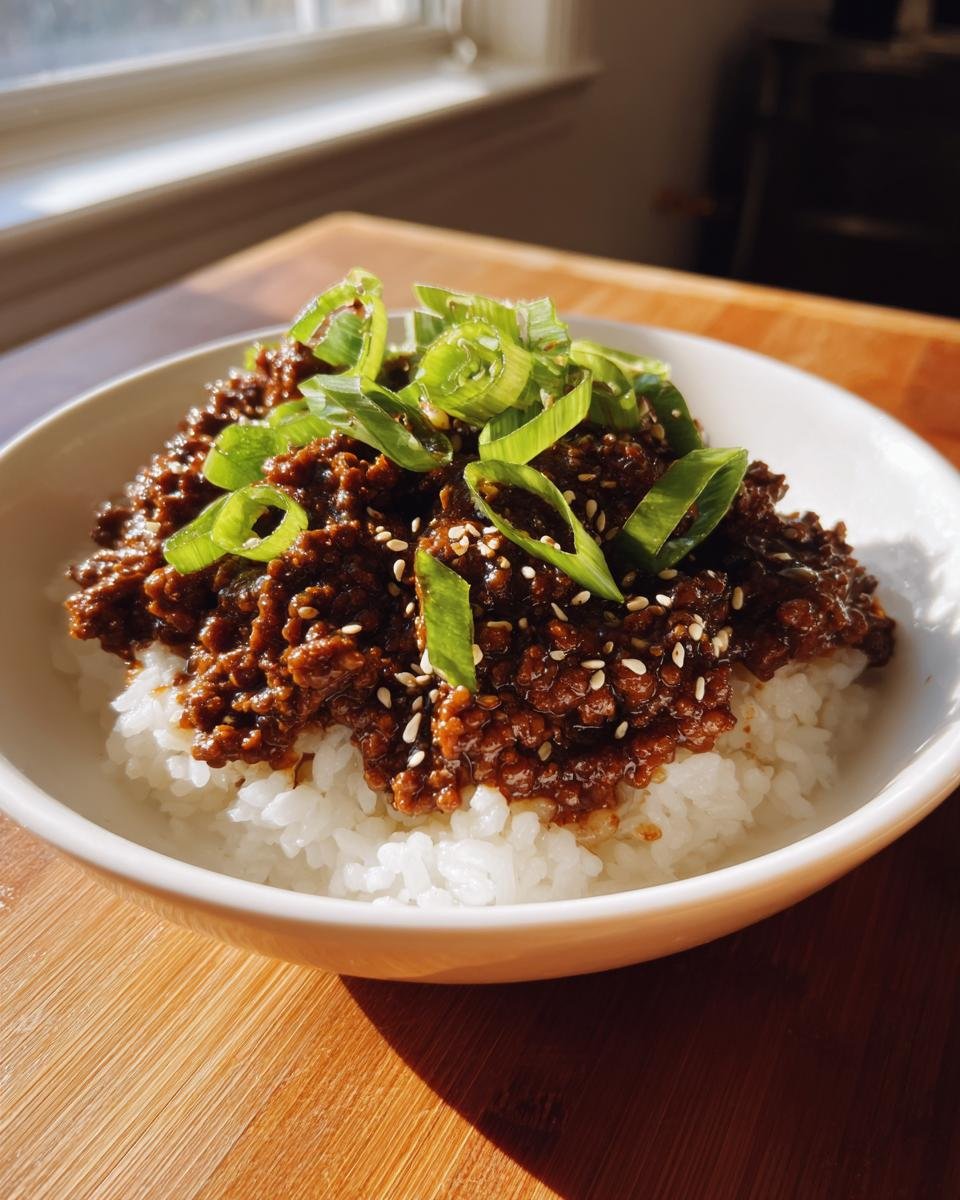
Now it’s time for the presentation! If you planned ahead, you already have your four bowls of perfectly cooked white rice waiting. Divide that rice evenly among your bowls. Next, spoon that glorious, thick, saucy Korean ground beef mixture right over the top of the rice mounds. Don’t just plop it on the side; let it mingle! Finally, finish it off with a lively sprinkle of those sliced green onions—they give you a nice fresh crunch—and a light dusting of sesame seeds. Dinner is officially served and you didn’t even break a sweat!
Tips for Success When Making Korean Ground Beef Bowl
We’ve covered the basics, but let me share a few little tricks that I learned the hard way over the years to make sure your Korean ground beef bowl is always restaurant-worthy, even on a Tuesday night!
My biggest piece of advice revolves around that optional, but highly recommended, gochujang. If you skip it because you’re worried about heat, you lose a layer of deep, fermented flavor that honestly makes this dish sing. If you’re sensitive to spice, just start with half a teaspoon! You can always add more heat later with sriracha, but you can’t take the gochujang flavor out once it’s in there. Seriously, hunt it down; it’s in most major grocery stores now.
When it comes to substitutions, you absolutely can trade out the ground beef. I’ve done this with ground turkey a few times, and it’s great! Just remember what I said earlier about swapping leaner meats—ground turkey can feel a little dry once it simmers for that full five to seven minutes. If you go that route, grab an extra tablespoon of water to keep things loose while the sauce reduces. Ground chicken works just as well!
And listen, don’t forget the power of a good side dish to balance all that savory goodness. While the recipe notes mention kimchi, which is fantastic, I often grab a jar of quick pickled red onions if I have them ready. The sharp acidity cuts right through the salty-sweet sauce beautifully. If you want a simple recipe for those onions, check out this recipe for Pickled Red Onions!
One last thing: If you find yourself with too much cooked ground beef mixture (like I always do!), it stores like a dream. Make sure you keep the beef separate from the rice in the container. It reheats perfectly on the stovetop with just a splash of water or broth to loosen it back up. If you love these kinds of incredibly easy, flavor-packed bowls, you should definitely take a peek at my Cilantro Lime Chicken Bowls tutorial too!
Variations for Your Korean Ground Beef Bowl
So, you’ve mastered the classic version, but now you’re thinking, “How can I shake this up next week?” That’s the spirit! This Korean ground beef bowl is such a stable base that you can really play around with it without losing that comforting, savory flavor we love.
The best part about this sauce is that it works magic on more than just ground beef. If you’re looking to bulk this up with veggies during that simmering stage, you have a few awesome options. I love tossing in some thinly sliced mushrooms—cremini or button—right after I drain the beef fat. They soak up the sauce like little sponges while the beef is still browning, so they cook perfectly by the time the sauce thickens.
Another great addition is using shredded carrots! Don’t grate them too finely; medium shreds are perfect. You can throw them in with the mushrooms or even right into the sauce mixture while it simmers. They soften up beautifully and add a tiny pop of sweetness that just makes the whole dish feel brighter. If you love that fun, brightly flavored bowl concept, you absolutely have to try my Zesty Street Corn Chicken Rice Bowl next!
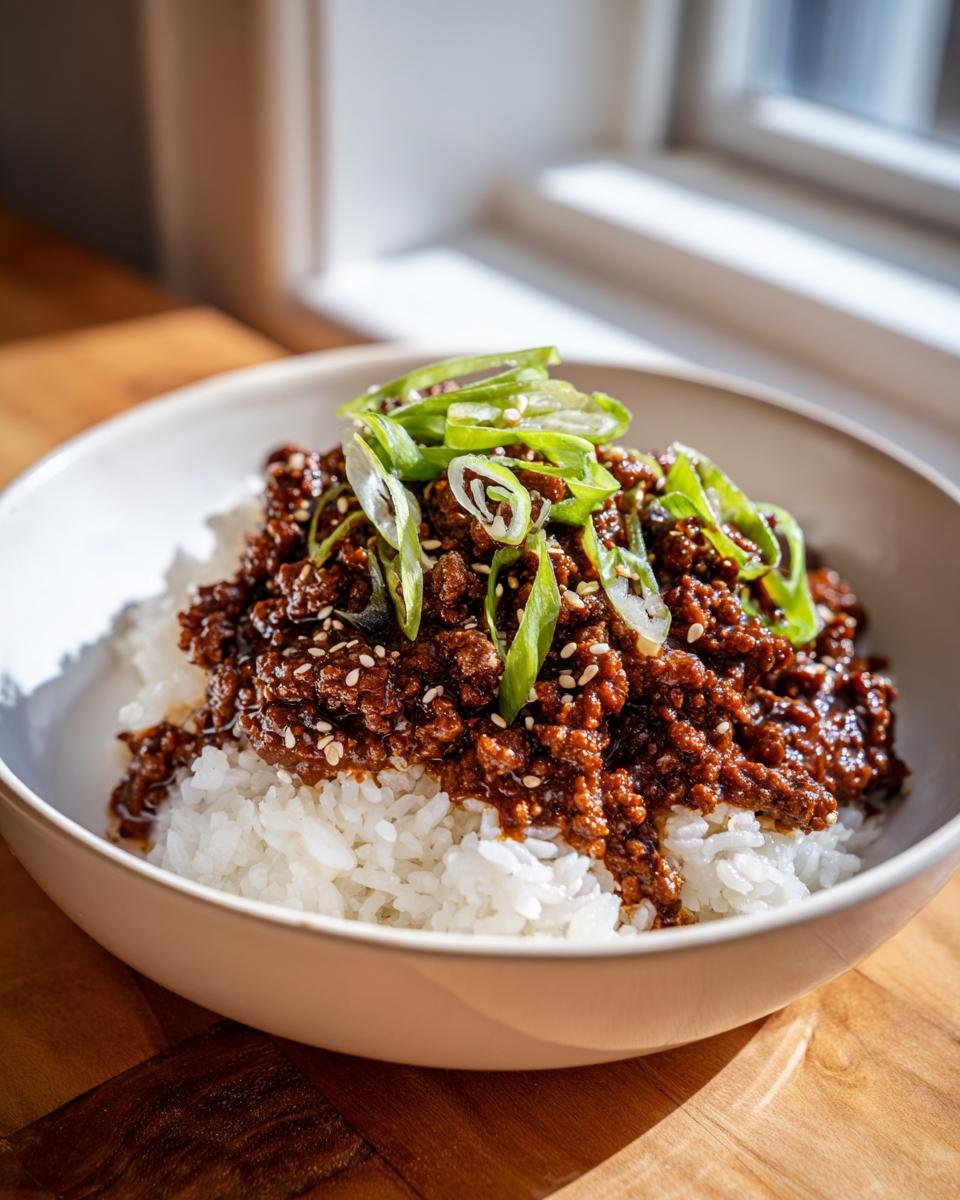
Now, let’s talk about switching up the delivery system! Rice is classic, but sometimes I just don’t want a heavy meal, especially in the summer. My absolute favorite way to switch from a bowl to something lighter is making quick lettuce wraps. Just use crisp, large lettuce leaves—like butter lettuce or romaine hearts. Spoon a couple of tablespoons of the warm Korean ground beef mixture into the leaf, maybe top it with one crunchy slice of cucumber or a dab of sour cream if you’re feeling wild, and eat it like a taco!
You can also swap the rice entirely for thinly sliced zucchini noodles (zoodles) if you’re cutting carbs drastically, or even serve it over quinoa if you want a nuttier flavor profile. All these changes just prove how versatile your trusty bottle of soy sauce and that handy ground beef can be!
Storage and Reheating Instructions for Leftover Korean Ground Beef Bowl
Okay, if you’re anything like me, you probably made a double batch because trying to accurately measure ingredients for just two servings always ends up messy. Good news: this savory Korean ground beef mixture is honestly even better the next day once those amazing flavors have really settled in!
My number one, gotta-do-this rule for leftovers is: keep the beef and the rice separate! Rice dries out horribly if you store it saturated in sauce, and you lose that perfect texture contrast when you reheat it all together. Store your cooked rice in one airtight container and the saucy beef mixture in another. Stored this way in the fridge, it stays perfectly fresh and delicious for about three to four days. If you aren’t sure about the quality of your stored leftovers, you can always check out our privacy policy, though that won’t tell you if your beef is still good! Just trust your nose!
Microwaving Mistakes to Avoid
The microwave is my best friend when I’m in a rush, but you have to treat the beef gently. Reheating the beef mixture straight up on high heat will make it rubbery, and nobody wants that sad, tough texture. I always put the beef in a microwave-safe bowl and stir in just a tablespoon of water or beef broth before covering it loosely with a paper towel. This creates steam to gently warm it through.
Microwave in 45-second bursts, stirring well between each burst, until it’s steaming hot all the way through. For the rice, reheat that separately too, perhaps with a tiny splash of water over the top, until it’s fluffy again. If you reheat them together, you’ll end up with a soggy mess!
Stovetop Reheating for Best Flavor
If you have five extra minutes, the stovetop is the absolute gold standard for reheating this Korean ground beef bowl filling. Take the ground beef mixture out of the fridge and place it in a small skillet—a non-stick pan is perfect here. Put it over medium-low heat. You want low and slow heat here to wake up those sauce flavors without burning the sugar.
Stir it constantly for maybe four minutes. If it looks drastically thicker than right after you cooked it—which it will because the sauce continues to thicken as it cools—add just a tiny splash of water or even a splash of rice vinegar if it seems too sweet now that it’s concentrated. Once it’s bubbly and beautiful again, you can spoon it right over your freshly reheated rice. It tastes almost exactly like it did straight out of the pan the first night!
Serving Suggestions to Complete Your Korean Ground Beef Bowl Meal
We’ve got the main star here—that saucy, savory goodness—but a meal isn’t truly complete without a couple of bright, contrasting side dishes, right? Think about it: the Korean ground beef bowl is rich, slightly sweet, and packed with umami. We need something crunchy and something acidic to really wake up your palate between bites. It makes the whole experience feel balanced!
If you’re keeping it simple, just serving this over white rice is fantastic, but if you want to impress someone (or just yourself!), take 10 extra minutes for one of these easy add-ons.
The absolute best thing you can do is introduce some sharp acidity. The sweetness of the brown sugar in the beef sauce just begs for something tart to cut through it. I’ve already mentioned my love for pickled red onions, and if you want easy instructions for those, you can find my favorite method here: How to Make Pickled Red Onions. They take basically no effort but bring the most incredible zing!
If you’re not into pickling, a simple, crispy cucumber salad is my next go-to. You don’t even need to cook anything! Just thinly slice a cucumber (English cucumbers are best because they have fewer seeds), toss it quickly with a splash of rice vinegar, a tiny pinch of salt, and maybe just a little whisper of sesame oil. That cool, fresh crunch is the perfect textural partner to the soft ground beef and rice.
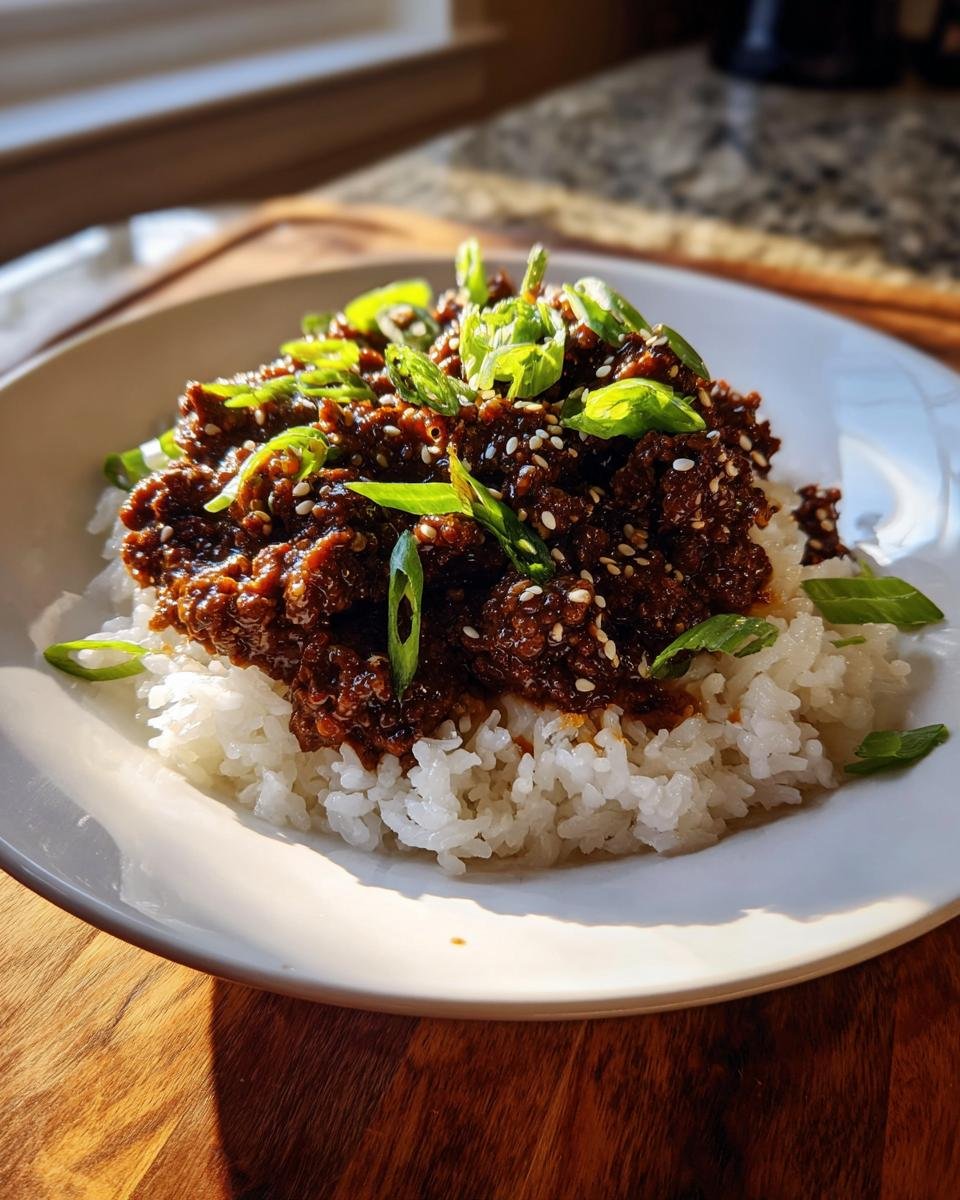
Another thing I highly recommend is making sure you get some texture contrast. The green onions on top help, but adding a few strips of fresh, crisp carrot shreds (yes, use the rest of the carrots if you were grating fresh ones!) or even some shredded red cabbage tossed lightly with a tiny bit of salt will give you that satisfying crunch that makes every bite more interesting.
Don’t forget about the richness! If you’re feeling indulgent, a dollop of plain Greek yogurt or sour cream on the side or right on top of the beef cuts the richness and adds a creamy element that is just heaven. It might sound a little non-traditional for a Korean-inspired dish, but trust me, it works wonders with that soy-ginger base!
Frequently Asked Questions About the Korean Ground Beef Bowl
Since this recipe is so simple, you might think you can’t mess it up, but everyone has questions! I see the same ones pop up all the time, so let’s tackle the big ones before you grab your skillet. Getting this flavor profile just right is all about knowing your substitutions!
Can I make the ground beef mixture ahead of time?
Yes, absolutely! This is my favorite part about making an easy weeknight dinner—I prep the sauce and cook the beef mixture on Sunday. Like I mentioned before, once it cools, it thickens up a bit, so when you reheat it, just add a tablespoon or two of water or maybe even some broth to loosen it up until it’s saucy again. It keeps wonderfully for up to four days in the fridge. It’s perfect for quick lunches!
What if I don’t have rice vinegar? Can I skip it?
I really, really advise against skipping the rice vinegar entirely! It brings the essential bright, slightly sour note that cuts through the richness of the soy sauce and brown sugar. If you are out, your absolute best substitute is apple cider vinegar—use about half the amount called for (so, one tablespoon instead of two) and see how you like it. White distilled vinegar is too harsh; it will taste too much like cleaning fluid, honestly! Just try to keep rice vinegar stocked; it’s so versatile, even in salad dressings!
Is this recipe good for meal prepping?
Hands down, yes! This is prime meal prep material. Portion the saucy beef into smaller containers and the rice into others. Since this holds up so well, I often make a huge batch of the beef mixture and pair it with different things throughout the week—sometimes rice, sometimes over shredded cabbage like I talked about in the serving suggestions. If you love prepping bowls like this, you might also really enjoy the structure of my Cilantro Lime Chicken Bowls recipe!
How can I make this Korean Ground Beef Bowl spicier?
If you tasted the sauce and thought, “Needs more fire,” don’t worry! The recipe suggests a teaspoon of gochujang, but if you’re a chili fiend like I am, you can certainly up that dramatically. I’d recommend adding another half teaspoon of gochujang right into the sauce mixture before you simmer it. If you don’t have that on hand but want immediate heat, a dash of Sriracha or even a tiny pinch of red pepper flakes tossed in with the beef while it browns works perfectly fine too. It adds that necessary punch that some people look for in an Asian beef dish! If you like that spicy bowl action, you should also look into my Zesty Street Corn Chicken Rice Bowl!
Is it possible to make this vegetarian?
You totally can switch this up! You get great results using crumbled tofu or even finely chopped mushrooms instead of the ground beef. If you use tofu, you’ll want to press out as much liquid as possible first. When you cook it, you want it to get lightly browned and a little chewy before you pour the sauce in. Since you’re skipping the beef, you’ll definitely want to use a vegan-friendly substitute for the soy sauce if you are keeping it strictly vegan. It’s a super satisfying rice bowl swap!
Nutritional Estimate for This Flavorful Korean Ground Beef Bowl
While I’m not a dietitian, I always calculate rough estimates just so I know what I’m dealing with fuel-wise when I’m making dinner for my family. Because we use brown sugar and soy sauce, the sodium is a little higher, but that’s where the flavor comes from!
Here is the general nutritional breakdown per serving, based on dividing the recipe into four equal bowls:
- Serving Size: 1 bowl
- Calories: 450
- Fat: 18g
- Saturated Fat: 6g
- Protein: 28g
- Carbohydrates: 45g
- Sugar: 15g
- Sodium: 850mg (Remember, much of this is from the soy sauce!)
- Cholesterol: 70mg
Please remember, these numbers are just an estimate based on standard white rice and 85/15 ground beef. If you use ground turkey or skip the brown sugar, those values will definitely shift! For more general cooking tips and contact information, feel free to check out our Contact Page!
Nutritional Estimate for This Flavorful Korean Ground Beef Bowl
While I’m not a dietitian, I always calculate rough estimates just so I know what I’m dealing with fuel-wise when I’m making dinner for my family. Because we use brown sugar and soy sauce, the sodium is a little higher, but that’s where the flavor comes from!
Here is the general nutritional breakdown per serving, based on dividing the recipe into four equal bowls:
- Serving Size: 1 bowl
- Calories: 450
- Fat: 18g
- Saturated Fat: 6g
- Protein: 28g
- Carbohydrates: 45g
- Sugar: 15g
- Sodium: 850mg (Remember, much of this is from the soy sauce!)
- Cholesterol: 70mg
Please remember, these numbers are just an estimate based on standard white rice and 85/15 ground beef. If you use ground turkey or skip the brown sugar, those values will definitely shift! For more general cooking tips and contact information, feel free to check out our Contact Page!
Print
Korean Ground Beef Bowl
- Total Time: 25 min
- Yield: 4 servings 1x
- Diet: Low Lactose
Description
A quick recipe for savory ground beef seasoned with Korean flavors served over rice.
Ingredients
- 1 pound ground beef
- 1 tablespoon vegetable oil
- 1/2 cup soy sauce
- 1/4 cup brown sugar
- 2 tablespoons rice vinegar
- 1 tablespoon sesame oil
- 1 tablespoon minced fresh ginger
- 2 cloves garlic, minced
- 1 teaspoon gochujang (Korean chili paste, optional)
- 1/4 cup water
- 4 cups cooked white rice
- 2 green onions, sliced, for garnish
- 1 teaspoon sesame seeds, for garnish
Instructions
- Heat the vegetable oil in a large skillet over medium-high heat.
- Add the ground beef to the skillet and cook, breaking it up with a spoon, until browned. Drain off any excess grease.
- In a small bowl, whisk together the soy sauce, brown sugar, rice vinegar, sesame oil, ginger, garlic, gochujang (if using), and water.
- Pour the sauce mixture over the cooked ground beef in the skillet.
- Bring the mixture to a simmer and cook for 5 to 7 minutes, stirring occasionally, until the sauce thickens slightly and coats the beef.
- Divide the cooked rice among four bowls.
- Spoon the Korean ground beef mixture over the rice in each bowl.
- Garnish with sliced green onions and sesame seeds before serving.
Notes
- For a spicier flavor, increase the amount of gochujang.
- You can substitute ground turkey or chicken for the ground beef.
- Serve with a side of kimchi for extra flavor.
- Prep Time: 10 min
- Cook Time: 15 min
- Category: Dinner
- Method: Stovetop
- Cuisine: Korean
Nutrition
- Serving Size: 1 bowl
- Calories: 450
- Sugar: 15
- Sodium: 850
- Fat: 18
- Saturated Fat: 6
- Unsaturated Fat: 12
- Trans Fat: 0
- Carbohydrates: 45
- Fiber: 1
- Protein: 28
- Cholesterol: 70
Keywords: Korean ground beef, ground beef bowl, easy weeknight dinner, Asian beef, rice bowl