
You know those recipes that just hug you from the inside out? That’s exactly what a proper, slow-simmered beef stew should do, and I’m telling you, nothing beats the real deal. Forget those thin, tomato-heavy versions you sometimes see; we are making true, rich, paprika-spiced **Hungarian Goulash**.
I spent years trying to nail the traditional method without spending my whole day hovering over the stove. Honestly, I nearly gave up until I finally understood the magic behind blooming the paprika *just* right. This recipe I’m sharing today is my go-to—it’s straightforward, uses simple pantry friends, and produces the most incredibly tender chunks of beef you can imagine. Seriously, you’ll need only a fork!
Why This Hungarian Goulash Recipe Stands Out
If you’re tired of beef stew that tastes vaguely of whatever vegetables you threw in, you’re going to love this. This isn’t just a lazy weeknight dinner; it’s truly the flavor of Hungary made easy for your kitchen. I spent way too long trying complicated layering techniques, but what I found is that great goulash really comes down to a few key things done right.
Here is why I keep coming back to this simple recipe, even when I’m craving something really special. I think you’ll love these points too:
- The authentic flavor profile hits perfectly thanks to blooming the sweet Hungarian paprika—that deep, savory red color is your first clue something good is happening!
- It’s surprisingly simple for how rich it tastes. We aren’t dealing with a dozen fancy steps, just good simmering patience. I actually prefer making this over trying to master something like a classic Italian pot roast because the payoff here is so huge for the effort.
- Beef tenderness is guaranteed. That low, slow cook time melts the connective tissue right out, leaving you with melt-in-your-mouth bites every single time.
Essential Ingredients for Authentic Hungarian Goulash
Okay, this is where the magic starts! When you’re making something this traditional, the ingredients really speak for themselves. I’ve laid out what you need below. Don’t skimp here, especially on the paprika—it makes or breaks the dish. Remember, we’re aiming for deep savoriness, not just heat.
For the base of this incredible **Hungarian Goulash**, here is exactly what you’ll gather:
You need about 2 pounds of beef chuck, and I mean cut it into honest, uniform 1-inch cubes. This size holds up beautifully during that long simmer. We start with 2 tablespoons of vegetable oil in a big, heavy pot. You will need 2 large onions, chopped roughly—don’t be shy, they dissolve down to flavor heaven! Three cloves of garlic need to be finely minced; a rough chop just won’t do the trick here.
For the vegetables that break down into the sauce, grab 1 large green bell pepper and 1 large tomato, both chopped. You’ll need 4 cups of rich beef broth—if you have homemade stock, please use it! That’s where the real depth comes from, maybe better than any store-bought option or homemade bouillon, if I’m honest about traditional flavor. Then, of course, the essential seasonings!
- 3 tablespoons of sweet Hungarian paprika (This is non-negotiable for the signature color and taste!)
- 1 teaspoon of caraway seeds—these add that distinctive, slightly earthy Hungarian note.
- 1/2 teaspoon of dried marjoram. Don’t grab oregano by mistake!
- Salt and black pepper—just until you taste it and know it’s right.
- Finally, 2 medium potatoes, peeled and cubed, which go in later to thicken things nicely.
Ingredient Notes and Substitution Tips for Hungarian Goulash
Let’s talk paprika for a second, because it really is the star here. You absolutely must find sweet Hungarian paprika. It’s milder and much sweeter than Spanish paprika, and it gives you that gorgeous, deep brick-red color without making the whole stew burn your mouth off. If you can only find hot Hungarian paprika, use half of what’s called for and maybe add a pinch of smoked paprika for depth, but be warned: smoked paprika is a little too woody for a truly authentic flavor profile.
Regarding the beef, chuck is perfect because it has enough fat and connective tissue to break down over two hours of simmering, making the stew rich and the meat tender. Don’t try to substitute with something lean like sirloin unless you plan on cooking it for 45 minutes total, otherwise, you’ll end up with chewy cubes. Stick to the chuck, trust me on this one!
Step-by-Step Instructions for Perfect Hungarian Goulash
This is where the real work happens, but don’t let the time scare you! Most of the time is hands-off simmering. We start everything on the stovetop, but once it boils, you just let time and gentle heat do their thing. If you need a good benchmark for slow cooking meat, this classic beef stew is very similar in its needs.
First things first: get your big, heavy pot or Dutch oven hot over medium heat. You want the oil shimmering slightly before you add the beef. Just toss in the beef cubes, and here’s a big tip—don’t overcrowd the pot! If you pile it all in, the meat just steams instead of searing. Do it in batches until every piece has a nice dark brown crust on all sides. Once browned, scoop that glorious beef out and set it aside for a minute.

Browning the Beef and Building the Flavor Base of Hungarian Goulash
Next up are those onions. Toss the chopped onions into the same pot, keeping that lovely browned residue—that’s flavor gold! Cook them down for about 5 to 7 minutes, stirring occasionally, until they look soft and translucent. Then, sneak in the minced garlic and let it cook for just 60 seconds. Watch it carefully so it doesn’t burn, or everything tastes bitter!
Now, return the browned beef to the pot. This is the crucial flavor blooming moment. Sprinkle in your sweet paprika, the caraway seeds, and the marjoram. Stir constantly for only one minute! If you cook the spices too long, they’ll burn and turn bitter, so one minute is key. After that quick toast, stir in your chopped bell pepper and tomato, followed by all four cups of beef broth. Season it fairly well now with salt and pepper.
The Simmering Process for Tender Beef in Hungarian Goulash
Bring that entire mixture up to a rolling boil over high heat. As soon as it starts bubbling happily, pull the heat way down to low. Cover the pot tightly and let it simmer gently for 1.5 hours. You shouldn’t hear much more than a soft ‘plop’ every now and then. This long soak is what makes the beef so unbelievably tender!
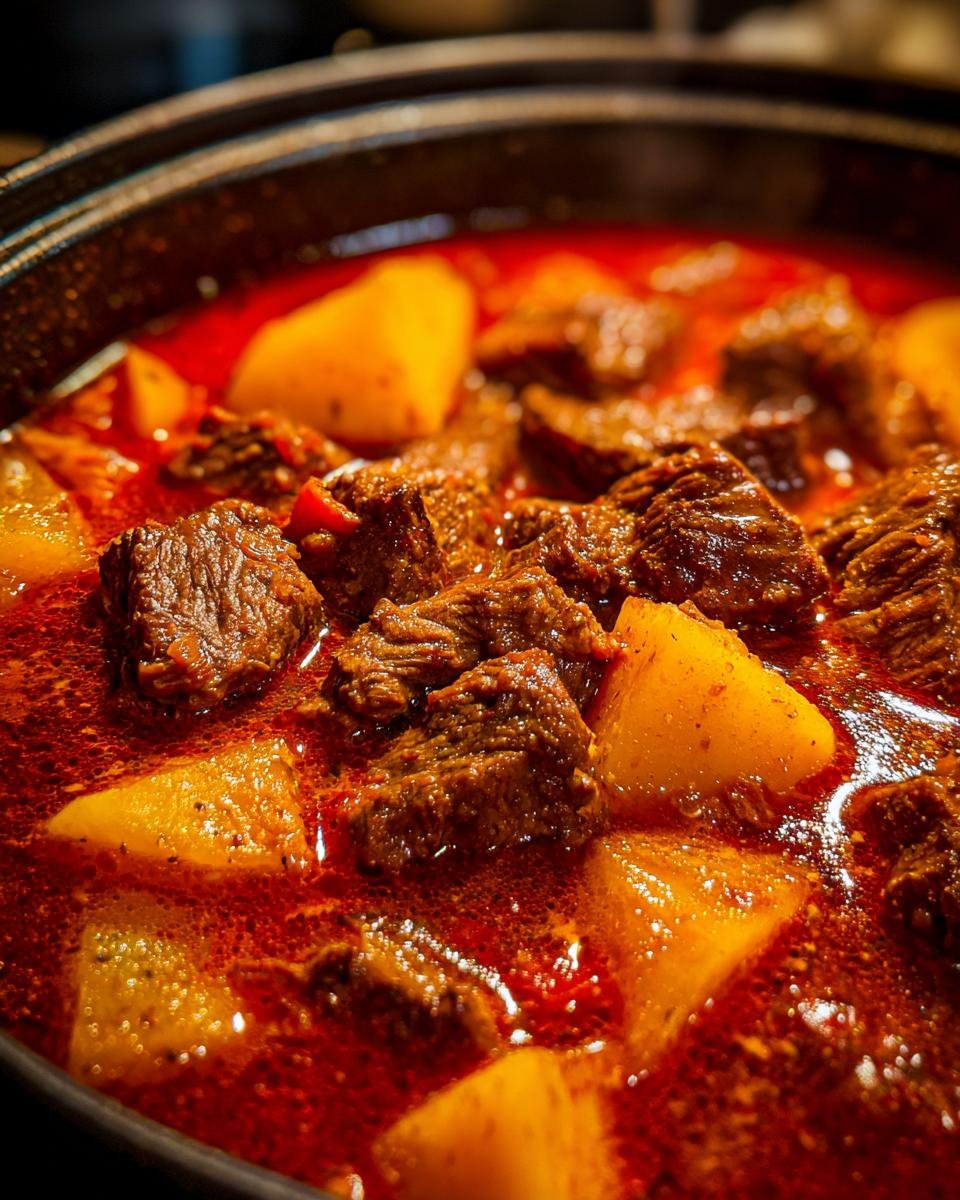
After that first hour and a half, taste the broth, and then add your cubed potatoes. Cover it up again and let it simmer for just another 20 to 30 minutes, or until those potatoes mash easily with a fork. If you feel like the stew is running a little thin for your preference—and this is totally optional—you can whisk 1 tablespoon of flour with a few tablespoons of cold water until smooth, and stir that slurry right into the goulash during the last 15 minutes of cooking. This helps everything get nice and thick without changing the core flavor profile!
Tips for Success When Making Hungarian Goulash
Listen, making a dish this iconic means sweating the small stuff. Everyone can dump ingredients in a pot, but the difference between a decent beef stew and a truly phenomenal **Hungarian Goulash** is all in those little timing and quality tweaks. I learned these the hard way, so you don’t have to repeat my mistakes!
First, let’s talk broth. If you’re trying to save a few pennies, resist the urge to use ultra-low-sodium canned broth. The flavor just isn’t there. You really want a good, rich beef broth—the kind that looks dark brown, not pale yellow. This liquid is the carrier for all the paprika goodness, so if the broth tastes weak, your goulash will taste weak, no matter how much spice you add later.
When it comes to seasoning, you have to taste it constantly during that last simmer. The salt content needs to balance out the slight bitterness from the caraway and the sweetness of the paprika. Don’t be afraid to adjust the salt right at the end. A little trick I learned is that if it tastes slightly flat, a tiny splash of red wine vinegar right before serving brightens up all the deep, savory notes. Trust me on the acid!
Also, think about the lid! You want that slow simmer, but you don’t want it so tight that no steam escapes. A little gentle evaporation concentrates the flavor perfectly. If your lid seals completely, you might end up with soup rather than a true stew consistency. I usually leave mine ever so slightly askew just to let a little steam plume out for the last 30 minutes of cooking. After all that slow cooking time, that beef needs to be perfect, and the consistency needs to hold its own when you’re scooping it out—unlike a thin batch of biscuits that might need gravy!
Serving Suggestions for Your Hungarian Goulash
Alright, you’ve cooked this incredible, rich **Hungarian Goulash** low and slow, and now it’s time to eat! The broth is savory, the beef is falling apart, and the potatoes have soaked up all that glorious paprika flavor. You can’t just eat this out of the pot with a giant spoon, although heaven knows I’ve been tempted!
This stew is hearty enough to stand on its own, but traditionally, you serve it over something starchy that can soak up all that extra seasoned liquid. My favorite pairing, hands down, is good, plain egg noodles. They just absorb the sauce perfectly without adding too much competing flavor.
If you’re not feeling noodles, you absolutely have to serve it with crusty bread. Think sourdough or a really sturdy peasant loaf. You need something substantial to use for dipping and soaking up every last bit of that sauce left in your bowl. My husband loves using chunks of bread instead of a spoon! If you’re looking for something a little lighter on the side, maybe skip the heavy carbs and instead serve it alongside a super simple, cooling cucumber salad or even some fresh, crusty buttermilk biscuits if you want an American twist.
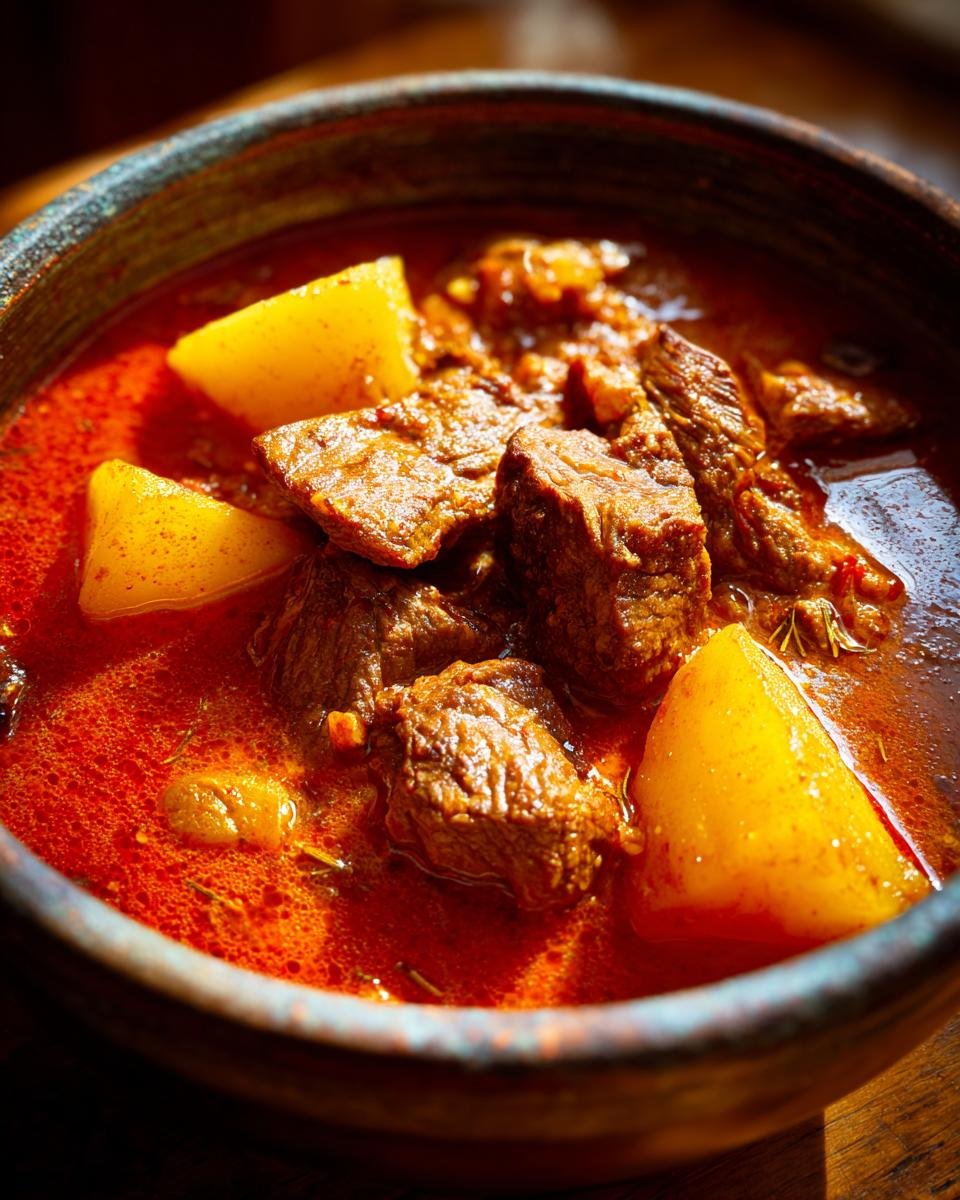
I’ve even served leftover goulash over mashed potatoes before, which is decadent but totally delicious. Whatever you choose, make sure it’s sturdy enough to handle the rich stew. Trust me, you don’t want delicate sides here; you want things that can handle a bit of deep, savory action!
Storage and Reheating Your Leftover Hungarian Goulash
This is the best part about making a big pot of something as comforting as **Hungarian Goulash**: leftovers! Seriously, most stews are even better the next day once all those spiced juices have really settled in overnight. I always try to make too much, just for this reason. You definitely want to store it right so you don’t ruin that amazing texture we worked so hard to achieve.
For refrigeration, let the goulash cool down on the counter for maybe an hour—don’t stick a scorching hot pot straight into the fridge, that’s bad practice! Once it’s warm, transfer it into airtight containers. It stays perfectly good in the fridge for three, maybe even four days. The beef flavor intensifies, which is fantastic!
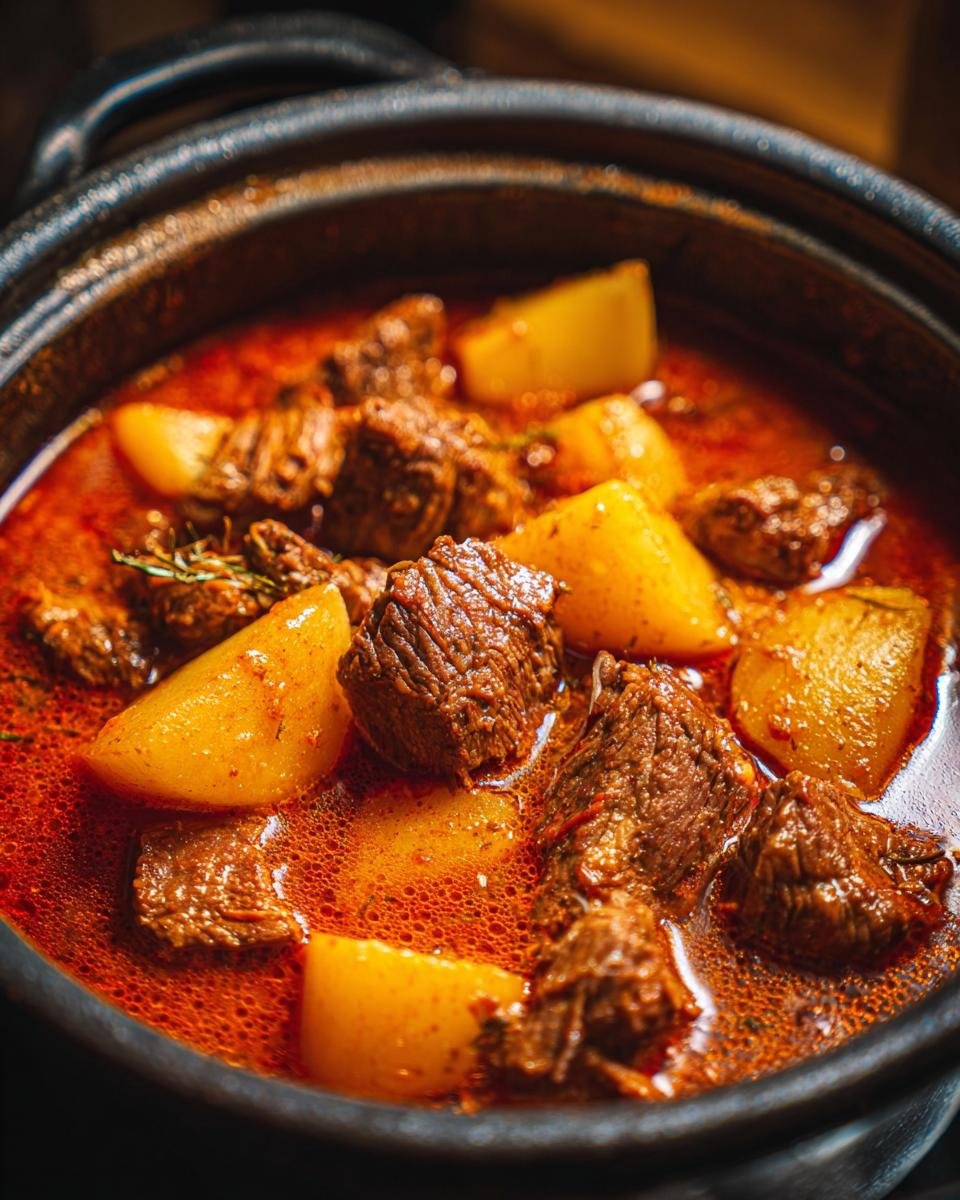
If you’re looking long-term storage, freezing is your best friend. I recommend portioning it out into single servings before freezing. This way, you just grab one container when you need a super quick meal later. Use freezer-safe bags or hard plastic containers. It keeps beautifully in the freezer for up to three months.
Now for reheating—this is where we protect the potatoes! If you reheat goulash that already has potatoes in it too aggressively, they can turn mushy. If you’re using the microwave, do short bursts and stir in between. My preferred method, especially if I’ve frozen it, is to move the goulash to a saucepan over low heat. Add a tiny splash of water or extra broth if it looks too thick—it tends to seize up when cold. Warm it slowly, stirring occasionally, until it’s piping hot all the way through. It’s such a comforting meal to reheat, almost like pulling a freshly made make-ahead gravy out of the fridge!
Frequently Asked Questions About Hungarian Goulash
I get so many questions about this recipe! It’s one of those classics where people have different ideas about what it *should* be. Honestly, I think that’s part of the fun of traditional cooking—everyone has their family version, right? Here are some of the things I hear most often when people are tackling their batch of **Hungarian Goulash**.
Can I use a different cut of meat than beef chuck for this beef stew?
You really shouldn’t mess with the chuck for the long simmer, but if you are in a huge pinch, you could try beef stew meat that’s cut slightly smaller than 1-inch cubes. Shoulder roast works okay too. But listen, if you use something lean like round steak, it will dry out and get tough during the two hours it needs to cook. Keep that fat and connective tissue in there if you want that luxurious, fall-apart texture! Also, I know some people look for iron sources like the ones listed here, but for this dish, beef is the way to go to get that rich flavor base.
How do I control the spiciness of my paprika stew?
This is easy! The recipe calls for sweet Hungarian paprika, and that’s what gives you the color without massive heat. If you are nervous, start with 2 tablespoons instead of 3 and taste during the final simmer. If you want a little kick, you can add a tiny pinch of cayenne pepper right when you add the marjoram, but be super cautious. A little goes a long, long way, and you don’t want to overpower that beautiful sweet paprika flavor.
Why did my goulash broth seem watery?
That happens sometimes, especially if your beef didn’t brown quite right or if you didn’t use a very tight lid! Remember, the starch released from the potatoes and a little bit of evaporation helps thicken it naturally. But if you’re done cooking and it’s still too runny for your liking, that’s where the little flour slurry comes in handy. Mix just 1 tablespoon of flour with a little cold water until it’s smooth—no lumps! Stir that in during the very last 15 minutes of cooking. It’s a quick fix that brings everything together perfectly, but use it sparingly!
Is authentic Hungarian Goulash supposed to be thick?
That’s a fantastic question! In Texas, when we call something a ‘stew,’ we usually mean something thick enough to almost stand up in the bowl, right? Well, traditional **Hungarian Goulash** is different. It should absolutely be rich and deep in color, but it’s much more of a hearty, flavorful soup or a very wet stew base than a thick gravy. The vegetables, especially the onions, are meant to break down and slightly thicken the liquid naturally. If you want it chunky, that’s fine, but don’t try to get it as thick as, say, a standard American beef stew—it’s just not the style! If you used that optional flour trick, you managed to move it toward the thicker side, but the natural state is pleasantly soupy.
Nutritional Estimate for This Hungarian Goulash
I always get asked about the nutrition facts, and I totally understand! Sometimes you want that deep comfort food without feeling like you need a nap immediately afterward. Because we’re using lean beef chuck and relying on vegetables for volume instead of tons of added creams or flour, this recipe actually comes out pretty balanced for a hearty meal. But remember, this is just an estimate, because how much broth you use or how much salt *you* personally add can change things!
Based on the recipe serving 6 people, here is what a standard serving of this delicious **Hungarian Goulash** looks like:
- Serving Size: 1 serving
- Calories: About 450 per serving (That’s actually quite good for two hours of slow-cooked beef!)
- Fat: 18 grams total fat (Nothing crazy here, mostly from the nice sear on the beef.)
- Carbohydrates: Around 30 grams (Mostly from the potatoes and veggies.)
- Protein: A whopping 45 grams! This is a powerhouse meal that will keep you full all afternoon long.
You can see the recipe is relatively low in sugar, clocking in at only 8 grams, which comes mostly from those sweet onions and the paprika itself. It’s a fantastic, filling main course that gives you a huge protein boost!
Share Your Experience Making This Hungarian Goulash
Now that you’ve gone through the whole process—from slowly browning the beef to smelling your house smell like the most wonderful little Hungarian kitchen—I really want to hear about it! Cooking is always better when you can share the results, right?
Did your beef turn out perfectly tender? Did you try the optional method for thickening, or did you stick to the natural simmer? I live for the feedback! Please take a moment and tell me how your **Hungarian Goulash** turned out in the comments section below this post. A quick rating helps other cooks know if they should trust my methods!
And seriously, if you snapped a picture of that beautiful, rich red stew in your bowl next to some crusty bread or noodles, tag me on social media! Seeing your finished product is what makes all this recipe testing and sharing worth it. It takes a village to keep these classic recipes alive, and I appreciate you bringing this beef stew into your dinner rotation.
If you have any specific questions that I didn’t cover in the FAQ section, throw them down there! I monitor the comments closely, and I’m always happy to jump in and help troubleshoot any issues—whether it’s about finding the right paprika or understanding the moisture level. You can also reach out directly via my contact page if you have something more private to share!
Print
Simple Hungarian Goulash
- Total Time: 2 hours 20 min
- Yield: 6 servings 1x
- Diet: Low Fat
Description
A straightforward recipe for traditional Hungarian beef and vegetable stew seasoned with paprika.
Ingredients
- 2 lbs beef chuck, cut into 1-inch cubes
- 2 tablespoons vegetable oil
- 2 large onions, chopped
- 3 cloves garlic, minced
- 1 large green bell pepper, chopped
- 1 large tomato, chopped
- 4 cups beef broth
- 3 tablespoons sweet Hungarian paprika
- 1 teaspoon caraway seeds
- 1/2 teaspoon dried marjoram
- Salt and black pepper to taste
- 2 medium potatoes, peeled and cubed
Instructions
- Heat the oil in a large pot or Dutch oven over medium heat.
- Add the beef cubes and brown them on all sides. Remove the beef and set aside.
- Add the chopped onions to the pot and cook until softened, about 5 to 7 minutes.
- Stir in the minced garlic and cook for 1 minute more.
- Return the beef to the pot. Stir in the paprika, caraway seeds, and marjoram. Cook for 1 minute, stirring constantly.
- Add the chopped bell pepper, tomato, and beef broth. Season with salt and pepper.
- Bring the mixture to a boil, then reduce the heat to low, cover, and simmer for 1.5 hours, or until the beef is tender.
- Add the cubed potatoes to the pot. Continue to simmer, covered, for another 20 to 30 minutes, or until the potatoes are tender.
- Taste and adjust seasoning if necessary before serving.
Notes
- For a thicker stew, you can mix 1 tablespoon of flour with a little cold water and stir it into the goulash during the last 15 minutes of cooking.
- Serve this goulash over egg noodles or with crusty bread.
- Prep Time: 20 min
- Cook Time: 2 hours
- Category: Main Course
- Method: Stovetop Simmering
- Cuisine: Hungarian
Nutrition
- Serving Size: 1 serving
- Calories: 450
- Sugar: 8
- Sodium: 450
- Fat: 18
- Saturated Fat: 6
- Unsaturated Fat: 12
- Trans Fat: 0
- Carbohydrates: 30
- Fiber: 5
- Protein: 45
- Cholesterol: 110
Keywords: Hungarian Goulash, beef stew, paprika, traditional stew, slow-cooked beef